
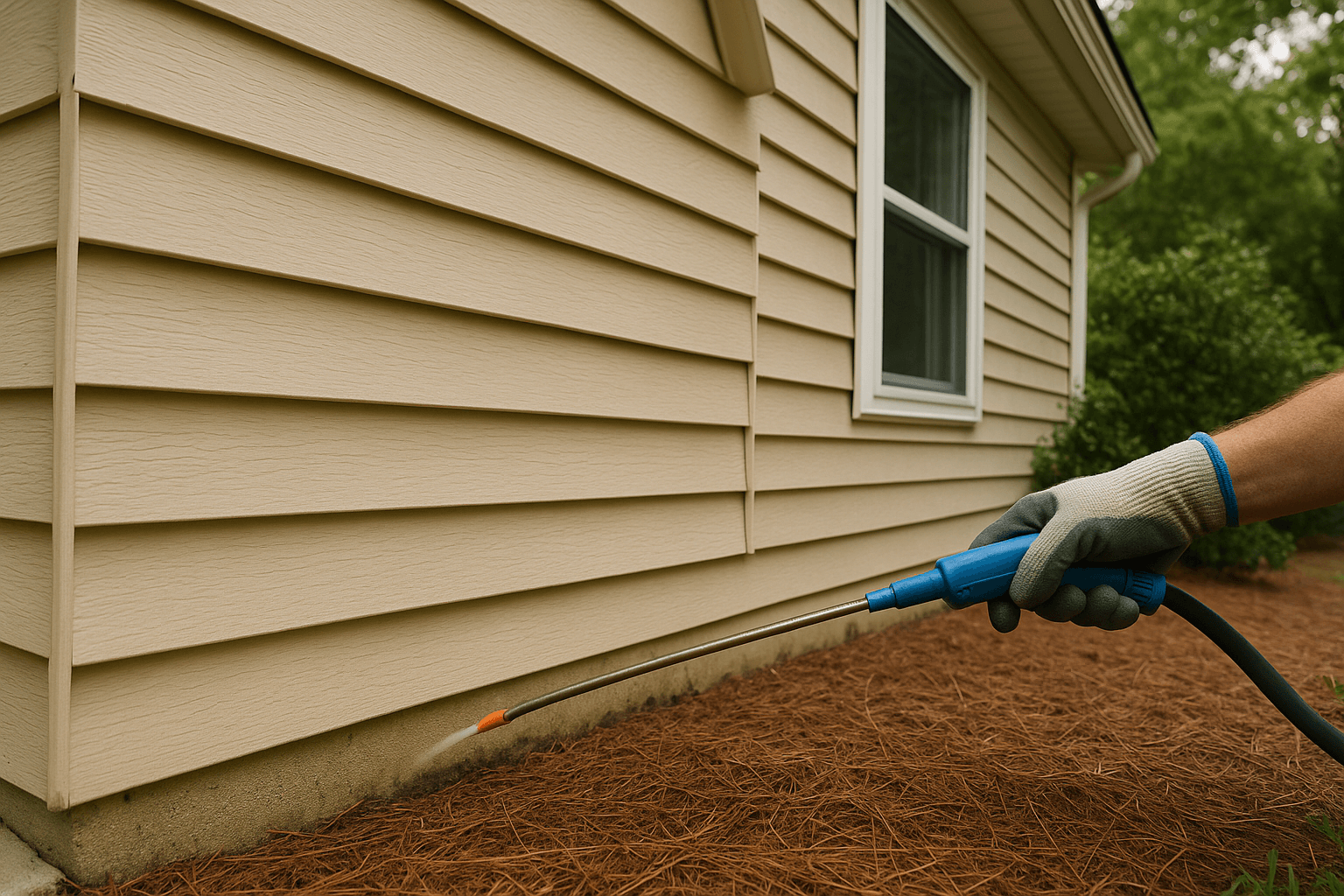
Owning a home in the Valley feels like a constant battle against the elements, but the most dangerous threat is the one you rarely see coming until it’s too late. While we worry about the blistering sun ruining our exterior paint or the hard water calcifying our pipes, Subterranean termites are quietly working their way up from the soil, treating your house framing like an all-you-can-eat buffet. It’s scary stuff, but honestly, understanding how these Pests operate is your best weapon against expensive repairs.
Wait, I Thought We Lived in a Desert?
You know what? That’s the most common misconception we hear. It makes sense on the surface—termites like moisture, and Maricopa County is famous for dry heat. But here’s the thing: Arizona has one of the highest concentrations of termites in the country. We aren’t just dealing with a stray bug here and there; we are sitting on top of massive colonies.
There’s an old saying among local contractors that there are two types of homes in Arizona: those that have termites, and those that will. It sounds dramatic, but it’s grounded in truth. The species we deal with most often, the Heterotermes aureus, has adapted perfectly to our environment. They live deep underground where the soil stays relatively cool and moist, surfacing only to forage for cellulose (that’s the wood in your walls).
They are relentless. While you are sleeping, or out grocery shopping, or watching the Cardinals game, they are foraging 24/7. They don’t sleep. They don’t take holidays.
Signs You Might Already Have Guests
Before we get into Prevention, we need to talk about detection. Most homeowners in Phoenix or Scottsdale don’t realize they have a problem until a remodel opens up a wall and reveals the damage. But if you look closely, the desert provides clues.
The most tell-tale sign is the mud tube.
These look like narrow veins of dried dirt running up your concrete foundation (the stem wall) or hanging from a ceiling. Termites build these tubes to protect themselves from the dry air and predators while they travel from the ground to your wood. If you see a pencil-sized line of dirt that doesn’t brush away easily, that’s a red flag.
Other things to watch for include:
- Hollow-sounding wood: If you tap on your baseboards or door frames and it sounds papery or hollow, the interior might be eaten away.
- Bubbling paint: Sometimes, termite damage looks exactly like water damage. If paint is uneven or bubbling but there’s no water leak, look deeper.
- Discarded wings: This usually happens after a monsoon rain when “swarmers” leave the nest to start new colonies. It’s gross, but it’s a clear signal.
Water: The Root of All Evil (and Termites)
Let me explain something about termite biology. They are soft-bodied insects. If they are exposed to our Arizona air for too long without protection, they dry out and die. This is why moisture control is arguably the most effective form of prevention you can do yourself.
In Maricopa County, we artificially create oases around our homes. We have irrigation drips, pools, and lawns. We are basically inviting them in with a cold drink.
The A/C Condensation Trap
Check your air conditioner condensation line. In the summer, that unit is running hard, and it’s pulling gallons of water out of the air. Where does that water go? If it drips right next to your home’s foundation, you are creating a perfect entry point. It creates a soft, damp pocket of soil that termites use as a launchpad to enter your home. Extend that drip line away from the house.
The Irrigation Issue
Leaky sprinkler heads or drip lines that are too close to the house are another major culprit. You want to keep the soil directly touching your foundation as dry as bone. If you have a drip emitter watering a bougainvillea right up against your exterior wall, move it back.
Your Landscaping Might Be Betraying You
We love our desert landscaping, don’t we? But the choices you make in the yard can either repel termites or ring the dinner bell.
One of the biggest mistakes homeowners make is wood-to-ground contact. This is the golden rule of Termite Prevention: Wood should never touch the dirt. If you have a wooden trellis, fence posts, or siding that goes all the way into the soil, you are providing a direct highway for termites to enter the wood without even building a tube.
The Mulch Dilemma
I get it—mulch looks nice and keeps plants moist. But organic mulch is essentially termite food scattered on the ground. When you pile it up against the foundation, you are feeding them and providing cover. In Arizona, crushed rock or gravel is a much safer bet near the home’s perimeter. If you must use mulch, keep it at least 15 inches away from the foundation.
The Six-Inch Rule
Ideally, you want a visible gap of at least six inches between the ground (soil or rock) and the start of your stucco or siding. This inspection zone allows you to see those mud tubes if they try to come up. If your landscaping covers the bottom of the wall, they can enter undetected.
Let’s Talk About Barriers and Treatments
Sometimes, you can do everything right with water and landscaping, and the termites still find a way. They are persistent little creatures. This is where professional barriers come into play.
Construction methods here often involve “slab-on-grade” foundations. Concrete cracks over time—it’s just what concrete does—and those tiny hairline cracks are plenty big enough for a termite to squeeze through.
There are two main ways to protect the structure:
| Method | How It Works | The “Vibe” |
|---|---|---|
| Liquid Termiticides | A chemical barrier is injected into the soil around the foundation. | Think of it like a moat. Modern chemicals (like Fipronil) are undetectable to termites. They walk through it, get infected, and carry it back to the queen. It’s the “Trojan Horse” approach. |
| Bait Stations | Plastic stations placed around the yard containing cellulose and a slow-acting inhibitor. | This is the long game. It intercepts foraging termites before they reach the house. It requires monitoring but is less invasive to the soil. |
| Physical Barriers | Stainless steel mesh or sand barriers installed during construction. | Great for new builds, but hard to retrofit. It physically blocks them from entering. |
Honestly, for existing homes in Phoenix, liquid treatments are often the gold standard because they provide immediate protection to the structure itself.
The “DIY” Myth
Here’s a question we get a lot: Can’t I just buy some spray at the hardware store and handle it myself?
I wish I could tell you yes. It would save everyone money. But here’s the reality: spot-treating termites with a can of bug spray is like trying to put out a house fire with a water pistol. You might kill the twenty termites you see, but you aren’t touching the colony of 300,000 living five feet underground.
Furthermore, many over-the-counter sprays are repellents. That sounds good, right? But if you spray a repellent in one spot, the termites just sense it and move five feet to the left, entering your home at a different point. You effectively just herded them into a different wall.
Professional termite control utilizes non-repellent transfer effects. We want the termites to walk through the treated area, survive long enough to return to the colony, and spread the Treatment to the others. It’s a biological game of tag that wipes out the population.
The Importance of Annual Inspections
You change the oil in your car, right? You go to the dentist (hopefully). Termite prevention is the same type of maintenance. Because our pressure for termite activity is so high in Arizona, getting a professional to walk the property once a year is crucial.
We know exactly where to look. We check the stem wall, we sound the garage framing, and we look for those subtle moisture intrusion points that untrained eyes miss. Catching a termite issue early can mean a $500 spot treatment rather than a $15,000 structural repair job.
It’s about peace of mind. When you lay your head down at night, you want to know your biggest investment isn’t being eaten out from under you.
Don’t Let Termites Eat Your Equity
Dealing with termites is just part of the package when you live in this beautiful desert. It’s a bit of a nuisance, sure, but it doesn’t have to be a disaster. By managing moisture, keeping your landscaping tidy, and maintaining a solid chemical barrier, you can keep your home safe.
If you’ve seen a mud tube, spotted something that looks like sawdust, or just haven’t had your home checked in a few years, don’t wait. These problems don’t go away on their own; they just get more expensive.
Arizona Termite Control is here to help you protect your home. We know Maricopa County, we know these bugs, and we know how to get rid of them for good.
Call us today at 480-660-3093