


Arizona termite library
Which termite are you looking at?
Real identification photos, useful warning signs and Arizona-specific guidance. Learn what to look for, then let an inspection settle the questions.
Start here · Phoenix & low-desert East Valley
Subterranean termites are the first group to understand.
University of Arizona identifies the desert subterranean termite, Heterotermes aureus, as a major urban pest and the most common subterranean termite in the low Sonoran Desert. Other species matter elsewhere in Arizona. [5]
Learn the insects and the warning signs: mud tubes at a building, recurring wings indoors and unexplained changes in wood. An outdoor termite colony or swarm does not by itself prove that the home is infested. [6]
Explore subterranean termites ↗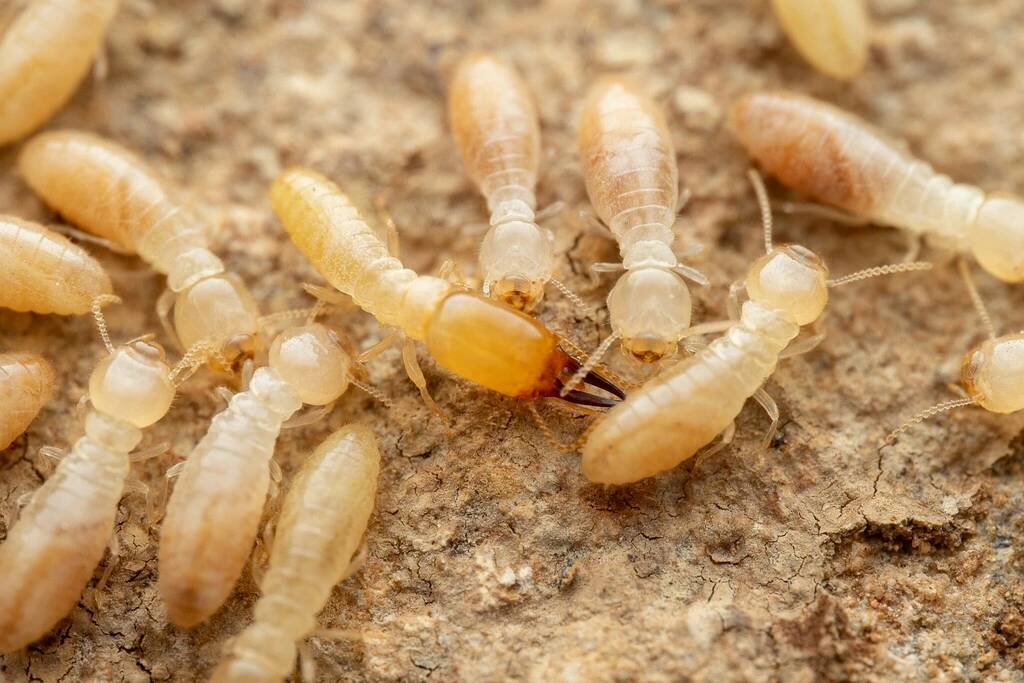
Desert subterranean termites (Heterotermes aureus) photographed beneath a rock in Arizona. An outdoor colony does not by itself establish activity in a home.
Photo: © Jake Nitta. Source · CC BY 4.0. Full-frame image, resized and converted for web display.
Three groups. Different clues.
Choose the guide that fits what you found.
Pictures help you describe a concern. They cannot establish the condition of concealed wood or the correct treatment on their own.
Start here for the low desert
Subterranean termites ↗
Mud tubes on the building, recurring wings indoors or unexplained wood changes deserve a closer look. Outdoor termites alone do not prove the home is infested.
Desert subterranean termites (Heterotermes aureus) photographed beneath a rock in Arizona. An outdoor colony does not by itself establish activity in a home.
Photo: © Jake Nitta. Source · CC BY 4.0. Full-frame image, resized and converted for web display.
Pellets and wood-based colonies
Drywood termites ↗
Hard pellets and recurring wings near wood are clues worth documenting. Pellets alone cannot establish activity or the extent of a concealed infestation.
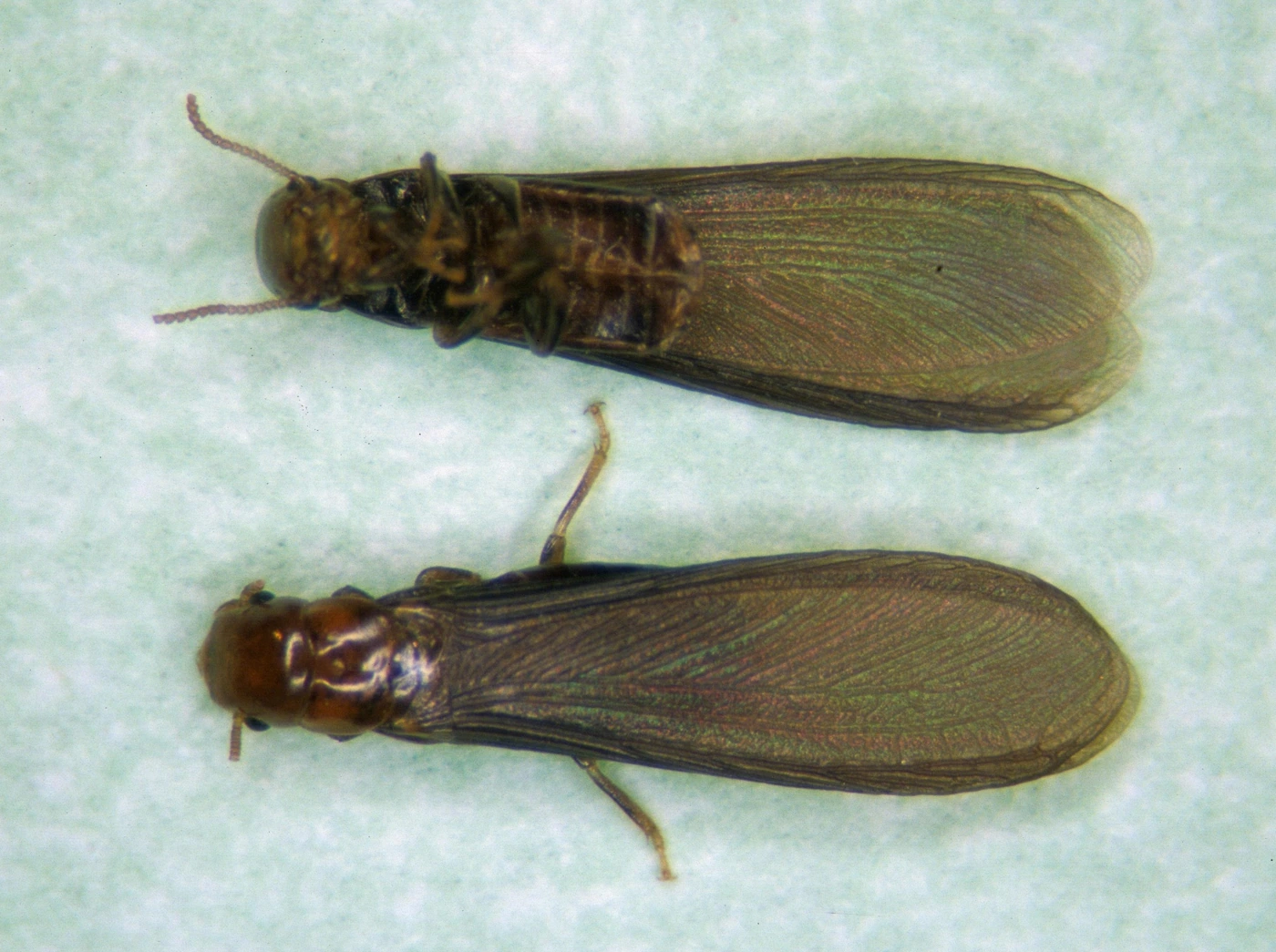
Western drywood termites (Incisitermes minor), identified by the source. This photograph is not documented as an Arizona observation.
Photo: © Whitney Cranshaw, Colorado State University, Bugwood.org. Source · CC BY 3.0 US. Full-frame image, resized and converted for web display.
Moisture context matters
Dampwood termites ↗
Record the insect evidence and the moisture history separately. Arizona desert dampwood activity can extend away from the moisture source into dry-looking wood.
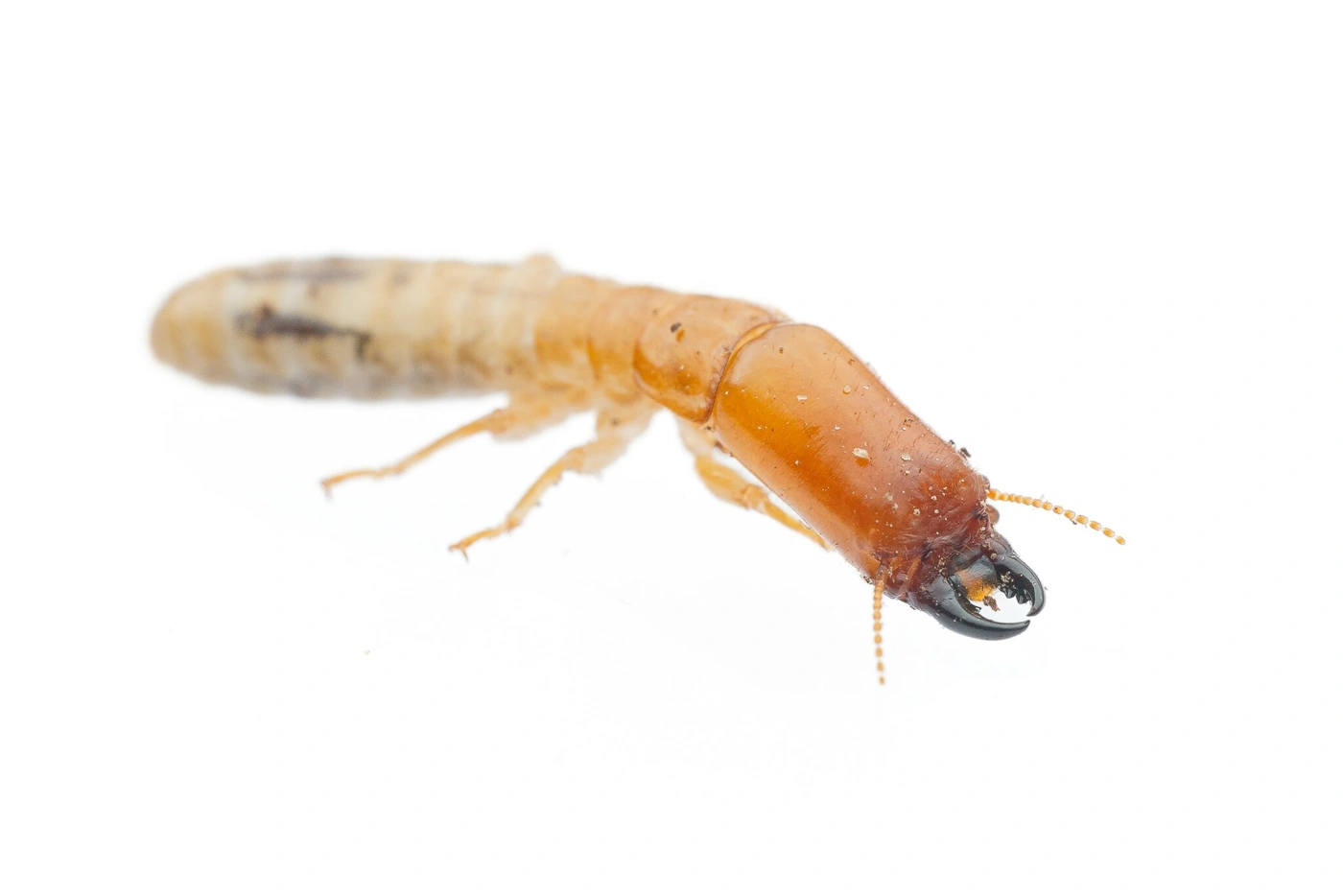
Desert dampwood termite (Paraneotermes simplicicornis) photographed in Scottsdale, Arizona. Identification follows the source observation; a photograph does not diagnose your property.
Photo: © Jake Nitta. Source · CC BY. Full-frame image, resized and converted for web display.
A homeowner’s quick comparison
These are practical distinctions from Arizona and Extension references, not a substitute for examination of the insect and the property. The dampwood row emphasizes Arizona’s desert species rather than assuming every coastal species behaves the same way. [2] [5] [6]
| Group | Where activity can occur | A useful warning sign | A common mistake |
|---|---|---|---|
| Subterranean | Soil-associated colonies and protected routes to wood or other cellulose food. | Earthen shelter tubes at the building, with other evidence such as wings or damaged wood. | Assuming a dry climate or an absence of exposed tubes rules them out. |
| Drywood | Colonies inside wood, including building components or wooden items, without a soil connection. | Hard, elongated fecal pellets expelled through small openings. | Treating every gritty pile as sawdust, or assuming no mud tubes means no termites. |
| Dampwood | Moisture-supported wood. Arizona desert dampwood termites can use moist buried wood and associated soil. | Insect evidence or irregular galleries near a moisture-supported food source. | Using a Pacific dampwood photograph as an Arizona species match, or checking only the visibly wet board. |
Keep the evidence useful
Photograph it. Note the location. Ask for a closer look.
Take a close view and a wider view before cleanup or repairs. Record whether the sign is indoors, attached to the structure or only in outdoor material. Keep prior treatment records handy, and avoid opening walls or entering unsafe areas to investigate.
You do not need to identify the species first.
Describe what you noticed and where. An inspection helps connect the evidence to your property and the right next step.
Request a Free Inspection ↗What an inspection can tell you ↗Sources & further reading
General biology and identification guidance draws on university Extension and EPA publications. Some detailed Arizona species references date to 2005 or 2009; they are not a current population survey or current pesticide instructions. California and other regional examples are identified where relevant. Sources were accessed October 12, 2026.
- [1]Arizona termite management ↗
- [2]Arizona drywood termites ↗
- [3]EPA identification and control ↗
- [5]Arizona termites of economic importance ↗
- [6]Arizona structural pests handbook ↗
Photographs are credited individually. They show the source-identified species or signs, not the results of an inspection at your property.
A clear next step
Your home is worth a closer look.
Noticed something unusual? Tell us where. We’ll help you take the next step.