


Why subterranean termites come first in this Arizona library
For a homeowner in the Phoenix area and the low-desert East Valley, subterranean termites are the group to learn about first.5 University of Arizona identifies the desert subterranean termite, Heterotermes aureus, as a major urban pest and the most common subterranean termite in the Sonoran Desert below 4,000 feet.5 That is a regional species account, not a claim that the same termite dominates every part of Arizona.5
Arizona also has Reticulitermes tibialis, which the university describes as the state’s most widely distributed subterranean termite.5 Species, elevation and conditions matter.5 A generic national calendar or a photograph of a termite from another region should not be treated as an identification of the insect at your home.5
The desert’s dryness is not protection by itself. H. aureus tolerates hot, dry conditions and can attack sound, dry structural wood.35 Fixing leaks is sensible prevention, but a plumbing leak is not a prerequisite for this termite to cause a problem.35
What they look like: workers, soldiers and swarmers
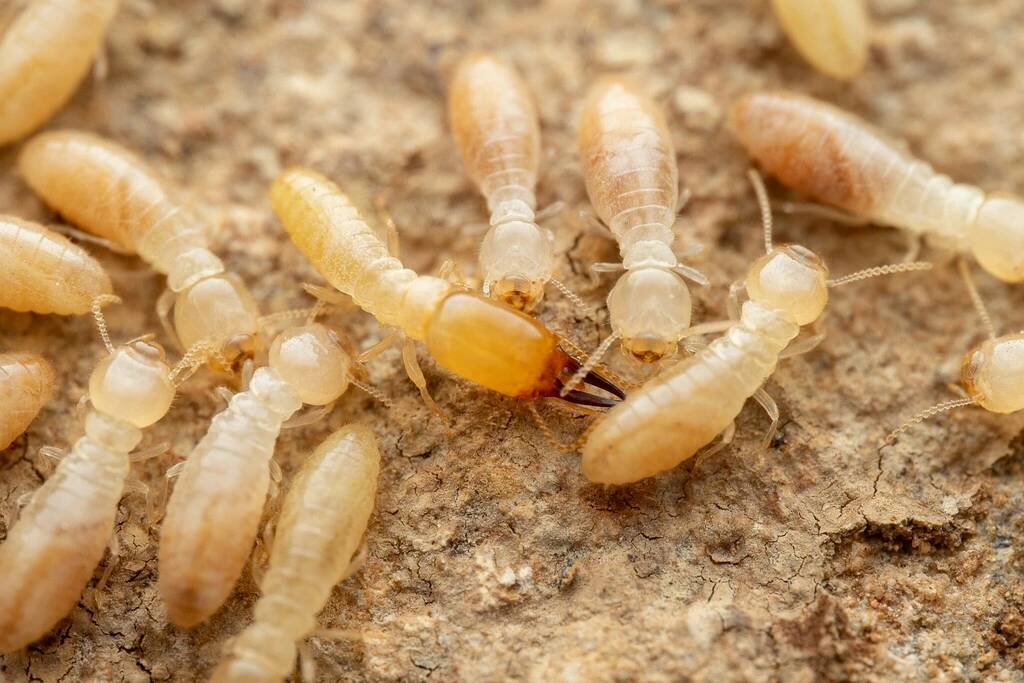
You may see different-looking insects from the same colony.45 Workers are pale, soft-bodied and wingless.45 They gather food, enlarge galleries and do the feeding that damages cellulose materials.45 They are not simply tiny versions of the darker winged insects you might find near a light.45
Soldiers have more conspicuous, hardened heads and enlarged jaws.56 Desert subterranean termite soldiers have relatively slender heads and mandibles.56 Comparing jaw details with another subterranean species is specialist work; Arizona’s structural-pest handbook says species-level identification requires magnification.56
Swarmers, also called alates, are reproductive adults with wings.35 Termite alates have a broad waist, relatively straight or beadlike antennae and two pairs of roughly equal-length wings.35 After dispersing, reproductive adults can shed their wings, so a wingless insect is not automatically a worker.35
Color is a clue, not a verdict.5 Arizona’s desert subterranean alates can be yellow to yellow-brown, while R. tibialis alates are darker.5 Pale drywood species also occur in Arizona.5 Do not choose a treatment or a termite group from color alone.5
The warning signs worth checking
Mud tubes on the house
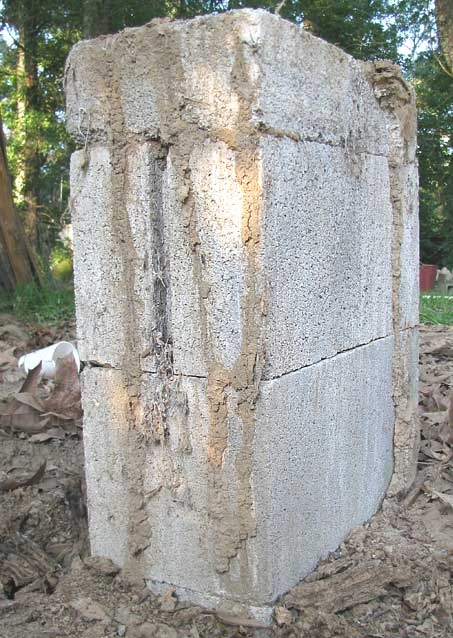
Subterranean termites make shelter tubes using soil, saliva and other material.14 These covered routes help them travel between a food source and favorable conditions.14 Tubes can appear on foundation edges, at cracks or penetrations, and in concealed routes around building materials.14
Not every tube has the same role.456 There are working, exploratory, drop and swarm tubes.456 Desert subterranean termites can produce tubes at foundations and hanging tubes from ceilings.456 A visible route deserves investigation, but its shape alone does not establish the species, activity or extent of an infestation.456
Photograph a suspected tube in place and include a wider view showing its location on the building.16 Avoid breaking it apart or spraying it before the evidence can be examined.16 A tube on landscape material should be reported separately from one attached to the home.16
Discarded wings or insects indoors
Wings on a sill or repeated insects inside can be reasons to arrange a closer look.6 An outdoor swarm is different: Arizona’s handbook says outdoor alates are a natural phenomenon and do not by themselves imply infestation of the home.6
Note whether the insects were inside or outside, whether a nearby window was open, and where you first saw them.26 Those details are more useful than the assumption that every swarmer found near a house came from its walls.26
Changes in wood and concealed damage
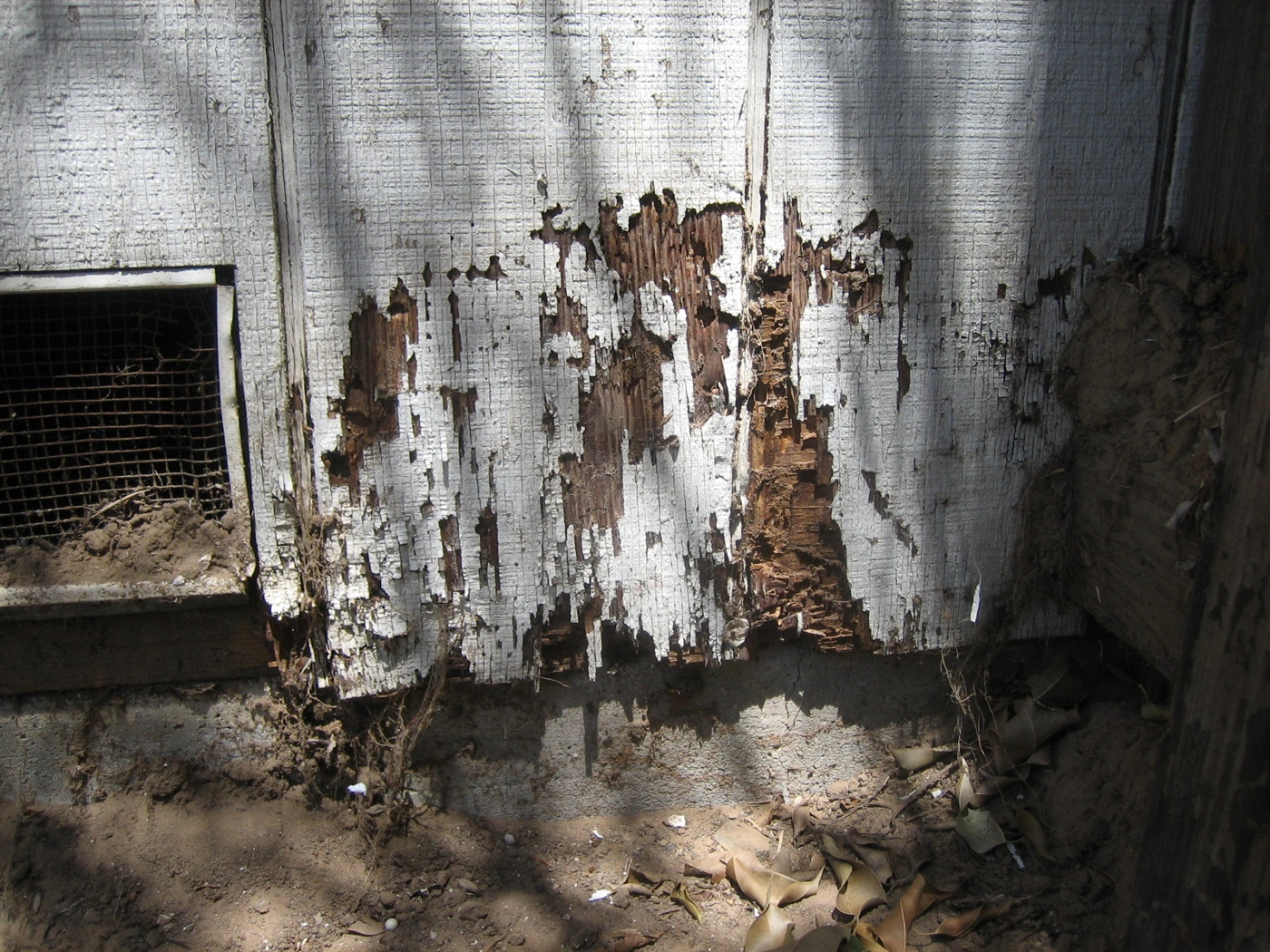
Subterranean feeding commonly follows the grain and removes softer parts of the wood.14 A thin remaining surface can conceal galleries beneath it.14 Blistering, a hollow sound or discovered damage is a clue, not enough information to identify the pest or declare the structure safe.14
Do not open walls, probe load-bearing material or climb into an unsafe space to investigate. Keep photographs of evidence exposed during a repair and explain what has already been covered. A termite assessment does not replace a structural evaluation when damage may affect safety.
Where they live, travel and feed
Subterranean termites use soil and protected galleries to reach cellulose food.15 Food can include wood and other cellulose-containing materials.15 They do not eat concrete as food, but construction cracks, utility penetrations and concealed spaces can offer pathways to wood beyond the visible surface.15
This is why a clear foundation edge is helpful but not a guarantee.14 Termites may travel behind finishes or between ground-level siding and a foundation.14 An absence of visible tubes does not prove that every concealed route is clear.14
New colonies can begin with dispersing reproductive adults, and established subterranean colonies can expand their foraging networks or divide.45 A home does not need to experience a visible swarm before termites can reach it.45
Termites also recycle dead plant material outdoors.56 Arizona has termites associated with grass, twigs and other natural material that are not equivalent to the main structural pest.56 A termite finding somewhere in the yard is not a reason to label every building infested.56
Does an old tube mean termites are active now?
Old damage and shelter tubes can remain after activity has changed.46 Live termites observed at the affected location establish activity there; an empty tube or damaged board alone does not settle the current condition of the whole property.46
An inspection should relate the sign to its location, accessible construction and previous treatment records. Tell us when you noticed it, whether it has changed, and whether there are earlier findings or a treatment diagram. Do not interpret a newly noticed sign as proof that the infestation began that day.
Swarming in Arizona: useful context, not a deadline
The University of Arizona species guide describes desert subterranean flights commonly occurring at dusk after monsoon rain during summer.5 It describes different timing for R. tibialis, including differences between lower and higher elevations.5 These are published observations, not a rule that a termite found outside a listed month cannot belong to that species.5
Collect the context instead of relying on a calendar: where the insects appeared, whether they had wings, the time of day and any recent change at the property. Do not apply a Florida Formosan swarming calendar to an Arizona sighting.
Termite or flying ant?
Look at several features together rather than relying on one.3
| Feature | Termite swarmer | Winged ant |
|---|---|---|
| Waist | Broad, without the pronounced pinched waist | Conspicuously narrow waist |
| Antennae | Relatively straight or beadlike | Clearly elbowed |
| Wings | Front and rear pairs roughly equal in length | Front wings longer than rear wings |
These features help separate termites from ants, not subterranean termites from every other termite group.56 Arizona also has look-alikes such as webspinners.56 A clear photograph or specimen can assist identification, but species-level confirmation may require closer examination.56
What you can do without turning this into a DIY treatment
- Photograph the evidence before cleanup or repairs, with both a close view and a location view.
- Note whether the sign is on the structure, indoors or only on outdoor material.
- Gather past reports, treatment diagrams and any current protection agreement.
- Keep the relevant area accessible if it is safe to do so.
- Request an inspection rather than selecting a pesticide from a photograph.
For prevention, fix leaks, improve drainage, avoid unnecessary wood-to-soil contact and keep firewood or wood debris away from the home.13 If work will disturb previously treated soil beside the structure, discuss it with the termite provider before the work begins.13
Professional soil treatments and baiting programs address different situations.34 Product labels, the termite type, construction, access and monitoring requirements matter.34 Killing exposed insects is not the same as demonstrating protection of a structure.34 This guide does not prescribe a product or establish which treatment your property needs.34
When to request an inspection
Request a closer look if you find a suspected mud tube on the house, recurring wings or insects indoors, or unexplained changes in wood. If you are unsure what the evidence is, say that in the request. You do not have to identify the species before contacting us.
Request an inspection or read about termite inspections and property-specific treatment. Include the location of the sign and any previous service history. The service team confirms appointment arrangements after following up.
Sources & further reading
General biology and identification guidance draws on university Extension and EPA publications. Some detailed Arizona species references date to 2005 or 2009; they are not a current population survey or current pesticide instructions. California and other regional examples are identified where relevant. Sources were accessed October 12, 2026.
- [1]Arizona termite management ↗
- [2]Arizona drywood termites ↗
- [3]EPA identification and control ↗
- [4]UC IPM subterranean and other termites ↗
- [5]Arizona termites of economic importance ↗
- [6]Arizona structural pests handbook ↗
Photographs are credited individually. They show the source-identified species or signs, not the results of an inspection at your property.