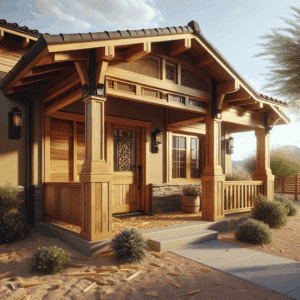
Building a custom home or adding a casita here in the Valley is exciting, but honestly, it’s also a little terrifying when you remember what lives under the dirt. Subterranean termites are basically waiting for your concrete slab to pour so they can set up shop in your new framing. Let me explain why stopping these wood-hungry Pests before the drywall goes up is the smartest money you will ever spend on your construction project.
Contents
- 1 Wait, Aren’t New Homes Naturally Bug-Proof?
- 2 The Chemical Moat: Treating the Soil Before the Slab
- 3 Physical Barriers: Keeping Them Guessing
- 4 Borate Wood Treatments: The Last Line of Defense
- 5 Don’t Forget the Water: Smart Moisture Control
- 6 The General Contractor Timeline Dance
- 7 Why You Really Need a Pro for This
- 8 Let’s Keep Your New Build Safe
Wait, Aren’t New Homes Naturally Bug-Proof?
You might think a brand-new house made of fresh lumber and solid concrete is totally safe from pests. New means bug-proof, right? Well, not exactly. Here’s the thing: Maricopa County is basically ground zero for subterranean termites. Our hard, caliche-filled soil is their natural habitat.
When builders scrape the lot to pour a foundation, they disrupt the termites’ natural food sources, like old Palo Verde roots or dried mesquite brush. So, what do the bugs eat instead? Your brand-new pine studs.
You know what? Dealing with bugs after the house is built is a massive headache. You have to drill through beautiful new tile floors or trench around expensive desert landscaping. Pre-construction termite treatments skip all that nonsense. It is about building a fortress from the ground up. By taking action before the walls are framed, you save yourself a massive amount of stress and money down the road.
The Chemical Moat: Treating the Soil Before the Slab
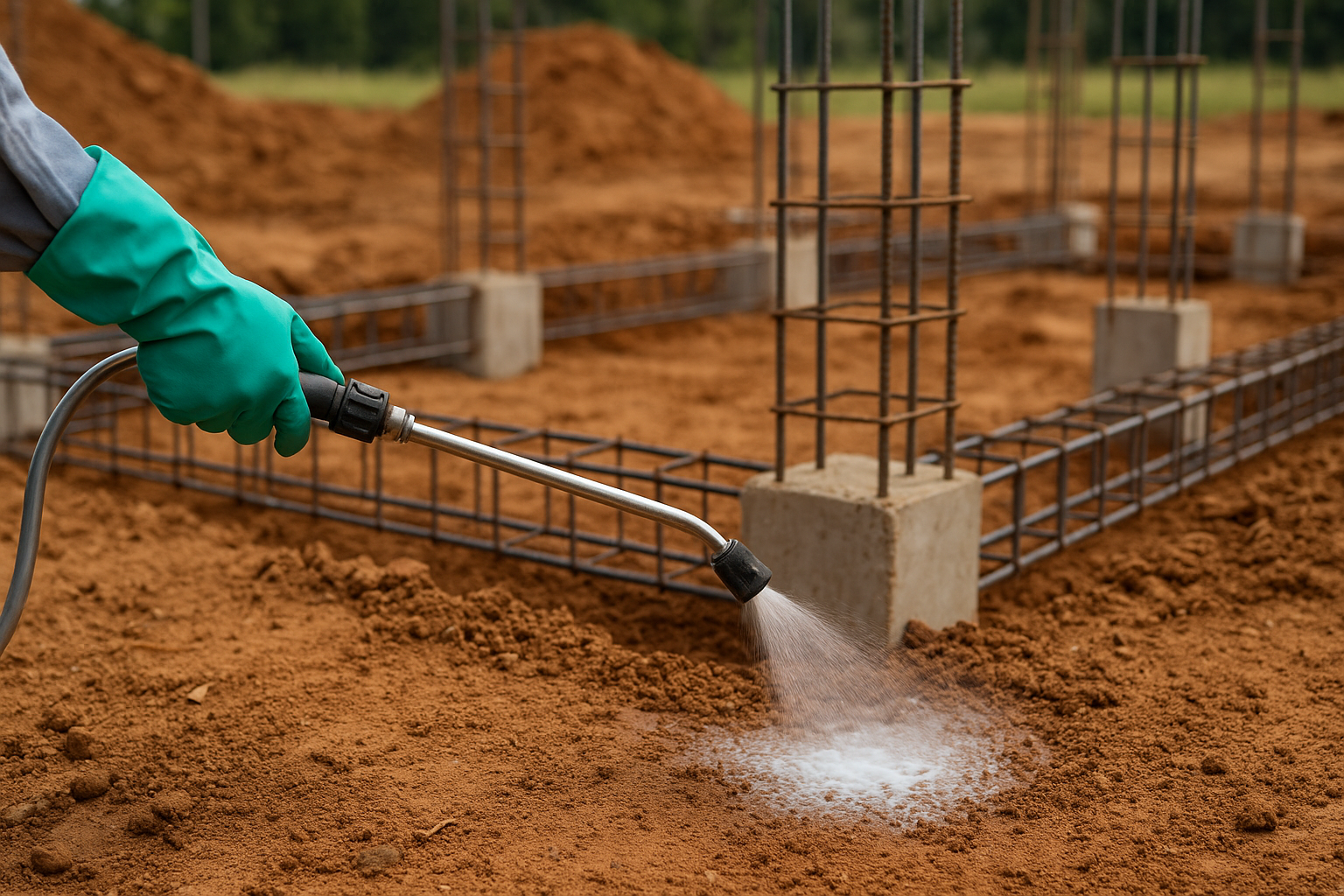
The most common method we use is a pre-construction soil Treatment, which is sometimes called a “pretreat” in the construction trades. Before the concrete trucks roll in to pour your foundation, we come in and saturate the compacted dirt with a liquid residual termiticide. That’s just a fancy way of saying we soak the ground with a specialized liquid that sticks around in the dirt for years.
Think of it like laying down an invisible, toxic carpet that termites simply cannot cross. When they try to tunnel up from their deep underground colonies to reach your home, they hit this treated soil.
Some chemicals repel them completely, but the really good ones are non-repellent. The termites crawl right through the barrier, get covered in the chemical, and carry it back to their queen like a trojan horse. They share it with the rest of the colony without even realizing they are doing it.
Speaking of queens, a single termite queen can live for decades. She can produce thousands of eggs a day. It’s wild to think about. That’s why taking out the whole colony, rather than just the workers you see near the surface, is so critical. If you just kill the workers, she’ll just make more. You have to eliminate the source.
We apply hundreds of gallons of this liquid precisely where the footings and the slab will go. The timing has to be perfect. The dirt gets treated, and then the vapor barrier and concrete usually go down shortly after to lock that chemical barrier into place.
Physical Barriers: Keeping Them Guessing
Chemicals are great, but relying on just one defense mechanism is risky. That is where physical barriers come into play. Termites only need a crack about the thickness of a credit card to squeeze through your foundation.
As concrete cures in our brutal summer heat, it naturally cracks. It just happens. Plus, you have plumbing pipes poking through the slab, creating tiny gaps between the PVC pipe and the concrete. These little gaps are basically superhighways for a termite infestation.
To stop them, we use stainless steel mesh or specialized plastic collars around those plumbing penetrations. It sounds a bit overkill, honestly. But these bugs are relentless. The mesh is woven so tightly that a termite physically cannot fit its head through the gaps.
They try and try, but they just can’t get through. They can’t get through the mesh, and they can’t chew through the steel.
Sometimes, we also use specialized sand barriers. Termites cannot tunnel through sand if the grains are exactly the right size. They try to move the grains with their jaws, but the sand just collapses back in on them. Combining physical barriers with a chemical pretreat gives your new home an incredibly strong defense system.
Borate Wood Treatments: The Last Line of Defense
Let’s say a stubborn termite somehow makes it past the soil treatment and the physical barriers. What then? This is where borate treatments save the day.
During the framing stage—right before the insulation and drywall go up—we spray the raw wood studs with a liquid borate solution. Borates are derived from natural minerals. They penetrate deep into the raw lumber and dry clear.
If a termite takes a bite of that treated wood, the borate disrupts the enzymes in their stomach, and they essentially starve to death. It is deadly to insects, but incredibly safe for mammals, which is great if you have kids or pets.
We see a lot of folks in places like Scottsdale and Gilbert using this method for their home additions. When the monsoon season hits and humidity spikes, termites get incredibly active. Having that treated wood is a massive relief. It is like buying an insurance policy for your walls. You will usually see the pest control crew out there spraying the bottom two feet of the framing, where termites are most likely to enter.
Don’t Forget the Water: Smart Moisture Control
Termites need water to survive. In the desert, they will seek out any moisture they can find. If the grading around your new foundation slopes toward the house instead of away from it, you’re basically inviting them in for a pool party.
We always advise homeowners and builders to pay close attention to drainage during the pre-construction phase. Make sure gutters are planned out to push water far away from the foundation. Also, keep a close eye on where you place your landscaping sprinklers.
I see it all the time. Someone builds a beautiful new home, and then they plant a row of shrubs right against the stucco. They set up a drip irrigation line that runs twice a day, keeping the soil right next to the foundation constantly damp. That damp soil is a magnet for Arizona subterranean termites.
Keep a dry zone of at least a foot or two around the perimeter of the house. Use decorative rock instead of wood mulch near the walls. Wood mulch is basically a free buffet for pests.
Here is a quick breakdown of how different pre-construction Prevention methods stack up against each other:
| Prevention Method | Primary Function | Lifespan |
|---|---|---|
| Pretreat Soil Barrier | Blocks entry below the concrete slab | 5 to 10+ years |
| Physical Mesh Collars | Seals pipe gaps and concrete joints | Lifetime of the home |
| Borate Wood Spray | Poisons the actual wood food source | Lifetime (if kept dry) |
The General Contractor Timeline Dance
Timing is everything when you are building a house. You cannot just show up whenever you feel like it to do a termite pretreat. It requires heavy coordination with your builder.
Usually, we get the call when the trenches are dug for the footings, but before the plastic vapor barrier goes down. It is a very tight window. Sometimes, we only have a day or two of notice before the concrete trucks are scheduled to arrive.
If you are managing your own build, or acting as your own general contractor, you have to stay on top of this schedule. If the concrete gets poured before the soil is treated, you completely lose the chance to do a proper pre-construction barrier. You are stuck trying to drill and inject chemicals later, which is exactly what we are trying to avoid.
Why You Really Need a Pro for This
I see a lot of ambitious DIYers trying to save a buck by spraying stuff they bought at the local hardware store right before pouring concrete for an addition. Please, do not do this.
The chemicals available over the counter to the general public just do not have the staying power required to protect a permanent structure. Plus, the sheer volume of liquid needed to properly treat a foundation is massive. We are talking hundreds of gallons for a standard Arizona home. You cannot mix that up in a little hand-pump garden sprayer.
Our technicians at Arizona Termite Control understand exactly how the local dirt absorbs these treatments. Caliche does not soak up liquid like normal soil does; it puddles and runs off if you aren’t careful. We know how to adjust the pressure and the application rate so the barrier is actually effective.
We also provide the official paperwork and warranties that city inspectors and mortgage lenders often require before they sign off on a new build. A receipt from a big box store won’t cut it when the building inspector comes knocking.
Let’s Keep Your New Build Safe
Wrapping this up, protecting your home before it is even built is just common sense. You have a golden opportunity to stop pests before they ever become a problem. Once the drywall is painted, the baseboards are nailed in, and the furniture is moved in, treating an active infestation becomes a whole lot messier and a whole lot more expensive.
Getting ahead of the problem gives you total peace of mind. You can sleep easy knowing that while the desert wildlife is crawling around outside, your home’s foundation is locked down.
If you are planning a new custom build, a casita addition, or even just pouring a new concrete slab for a garage, we need to talk. Don’t wait until the framing is already up. Give us a call today at 480-660-3093. Or, if you prefer to handle things online, you can Request a Free Inspection through our website. We will look at your site plans, evaluate your dirt, and put together the exact right strategy to keep those desert termites far away from your investment.