Living in the Valley of the Sun comes with a lot of perks—stunning sunsets, mild winters, and endless hiking trails—but it also comes with a hidden price tag buried right beneath our feet. If you own a home in Maricopa County, you aren’t just battling the summer heat; you are likely sitting on top of a Subterranean termite empire. Honestly, it’s not a matter of if your home will encounter termites, but when, making a solid inspection routine your best defense against a very expensive surprise.
Contents
Why You Can’t Just Ignore This
Here’s the thing about termites in Arizona: they are incredibly patient. Unlike a monsoon storm that rolls in loud and heavy, termites are the silent destroyers. They work 24/7, chewing through the cellulose in your home’s structure without ever taking a coffee break.
You might think your home is safe because it’s built of block or stucco. That is a dangerous myth. While the exterior walls might be masonry, the internal framing, baseboards, and roof trusses are likely wood. Plus, our local soil is teeming with the Heterotermes aureus—the desert subterranean termite. They don’t need much to thrive, just a tiny crack in your foundation and a little bit of moisture.
Considering that most homeowners insurance policies do not cover termite damage, the financial risk falls entirely on your shoulders. We are talking about thousands of dollars in repairs if an infestation goes unchecked for too long. A little bit of proactive looking around today can save your wallet tomorrow.
Grab Your Gear: The Homeowner’s Toolkit
You don’t need a degree in entomology or expensive equipment to do a basic check. You just need to be observant and willing to get your knees a little dusty. Before we start, grab a few simple tools.
- A strong flashlight: Shadows are a termite’s best friend. You need to see into the dark corners.
- A flathead screwdriver: This is for “sounding” the wood. We’ll get to that in a minute.
- A pair of coveralls or old clothes: You’re going to be looking under sinks and maybe peeking into the crawl space or attic.
That’s it. You aren’t performing a chemical Treatment; you are just acting as the first line of defense. If you spot something suspicious, that is when you call in the heavy hitters like us at Arizona Termite Control.
Let’s Step Outside (Where It Usually Starts)
The battle against termite infestations almost always begins at the foundation. Subterranean termites live in the soil—hence the name—and they have to commute to work (your house) every day. Because they have soft bodies that dry out quickly in our dry Arizona air, they build shelter tubes to travel safely.
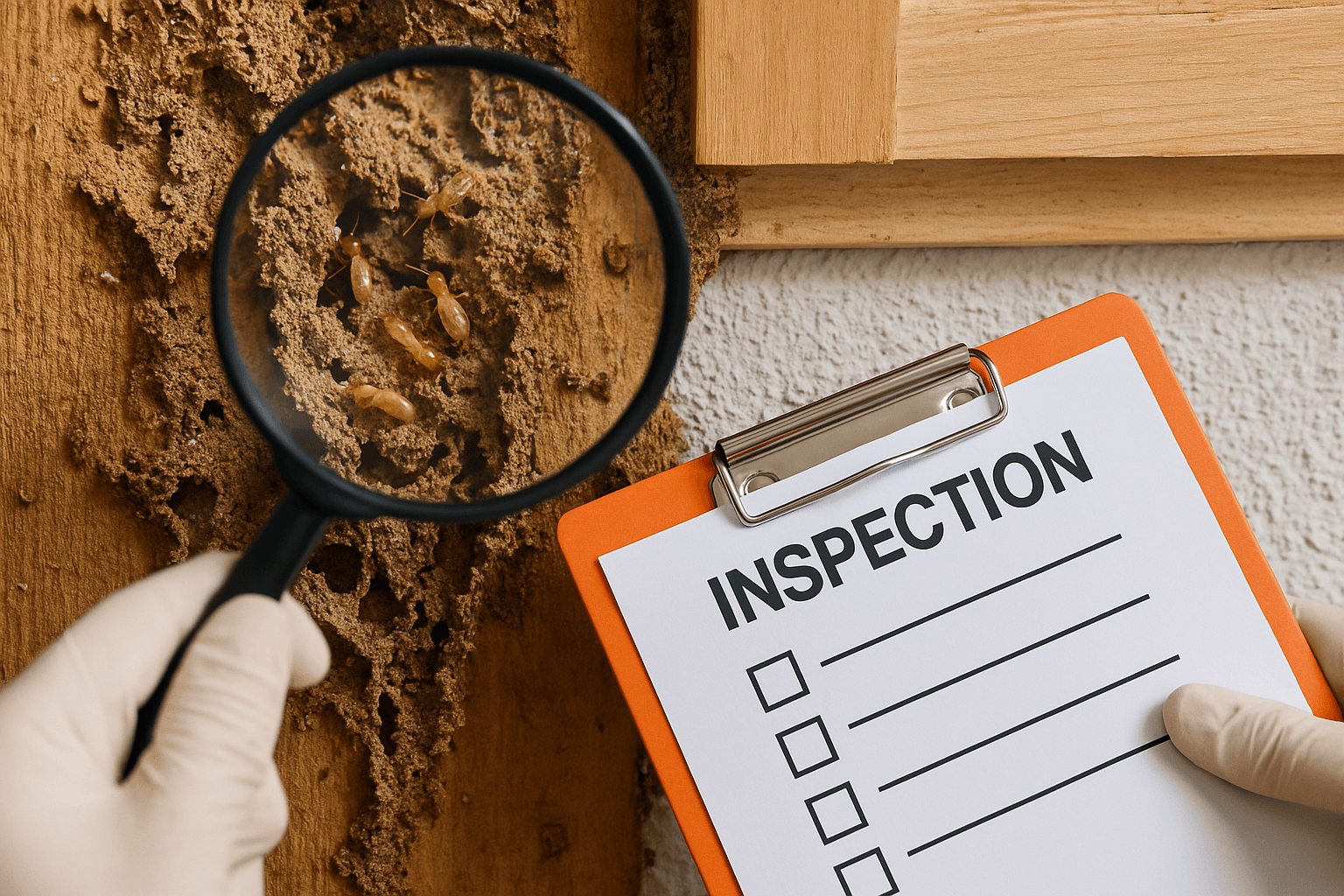
Walk around the entire perimeter of your house. Walk slowly. You are looking for mud tubes. These look like veins of dried dirt, usually about the width of a pencil, running up your foundation stem wall. Sometimes they wiggle; sometimes they are straight. If you see one, break a small piece off. If it’s rebuilt a few days later, you have active activity.
The Stucco Problem
In Maricopa County, stucco homes are everywhere. The problem is when the stucco extends all the way down into the dirt (we call this “earth-to-wood contact” or “stucco-below-grade”). This basically creates a hidden highway for termites. They can travel behind the stucco and straight into your walls without you ever seeing a mud tube.
Check the bottom of your exterior walls. There should be a visible gap of a few inches between the stucco and the soil. If there isn’t, you need to be extra vigilant.
| Landscape Feature | Risk Level | Why? |
|---|---|---|
| Wood Piles | High | Stacking firewood against the house is like offering a free buffet. |
| Mulch | Moderate | It holds moisture and is made of wood. Keep it 12 inches back from the foundation. |
| Gravel/Rock | Low | This is preferred in AZ. It drains well and doesn’t feed the bugs. |
Inside the House: Signs Hidden in Plain Sight
Okay, let’s head inside. You might think, “I’d see bugs if they were here,” but that is rarely the case. They hide inside the wood.
Grab that screwdriver. You are going to go around to your baseboards, window sills, and door frames. Use the handle of the screwdriver to tap on the wood. Solid wood makes a dull thud. Termite-damaged wood sounds hollow or papery. It’s a distinct difference.
Keep an eye out for these subtle clues:
- Bubbling Paint: If your paint looks uneven or bubbled, it might not be water damage. Termites eat the cardboard backing of the drywall, leaving just the paint layer behind.
- Stuck Windows or Doors: Sometimes, this is just the house settling. Other times, it’s because termites have introduced moisture into the frame, causing the wood to swell.
- Pinholes in Drywall: Sometimes termites accidentally chew through the wall and quickly patch it up with dirt. It looks like a tiny speck of mud on your white wall.
Water is the Enemy (And Termites Love It)
Here is a strange contradiction about living in the desert: even though it’s dry, our homes create artificial oases. Termites are relentlessly attracted to moisture. If you have a leak, you are essentially putting up a neon “Open for Business” sign.
Check your hose bibs outside. Are they dripping? What about the A/C condensate line? In Phoenix, our A/C runs constantly, creating a steady drip of water near the foundation. If that soil stays permanently damp, termites will find it.
Inside, look under the sinks in the kitchen and bathroom. A slow leak from a P-trap can rot the cabinet floor, providing the perfect mix of water and wood. By fixing these leaks, you aren’t just saving on your water bill; you are making your home inhospitable to Pests.
The “Swarm” Season
You might hear locals talk about “swarmer” season. This usually happens after our monsoon rains or warm spring days. The colony sends out winged reproducers to start new colonies.
If you see flying insects inside your home that look like flying ants, take a closer look.
- Ants: Have a pinched “waist” and unequal wing lengths.
- Termites: Have a straight body (no waist) and wings that are all the same length.
Finding discarded wings on your windowsill is a massive red flag. It means a swarm happened recently, and they might be trying to set up shop in your walls.
When DIY Isn’t Enough
Look, doing your own walk-through is fantastic for early detection. It keeps you aware of your property’s condition. But let’s be real—you can’t see through walls, and you can’t see under the concrete slab.
Professional Inspections are different. At Arizona Termite Control, we know exactly how the local construction styles in Maricopa County contribute to infestations. We know that a post-tension slab requires a different approach than a monolithic pour. We use tools that detect moisture variances and sound discrepancies that the average flashlight check will miss.
If you found something suspicious during your guide-led tour—a mud tube, a hollow baseboard, or just a pile of weird wings—don’t panic. But don’t wait, either. Termites work fast, but we work faster.
Let’s Secure Your Home
Your home is likely your biggest investment. Don’t let a colony of bugs undermine its value. Whether you’ve spotted a potential issue or you just want peace of mind knowing your foundation is secure, we are here to help.
You have two easy ways to handle this today. You can pick up the phone and chat with our local team—we’re friendly, we know the area, and we’ll give it to you straight.
Call us now at 480-660-3093
Alternatively, if you prefer to get things moving online, you can click below to set up a time for us to come out.
Don’t let the termites win. Let’s get that inspection on the books.