
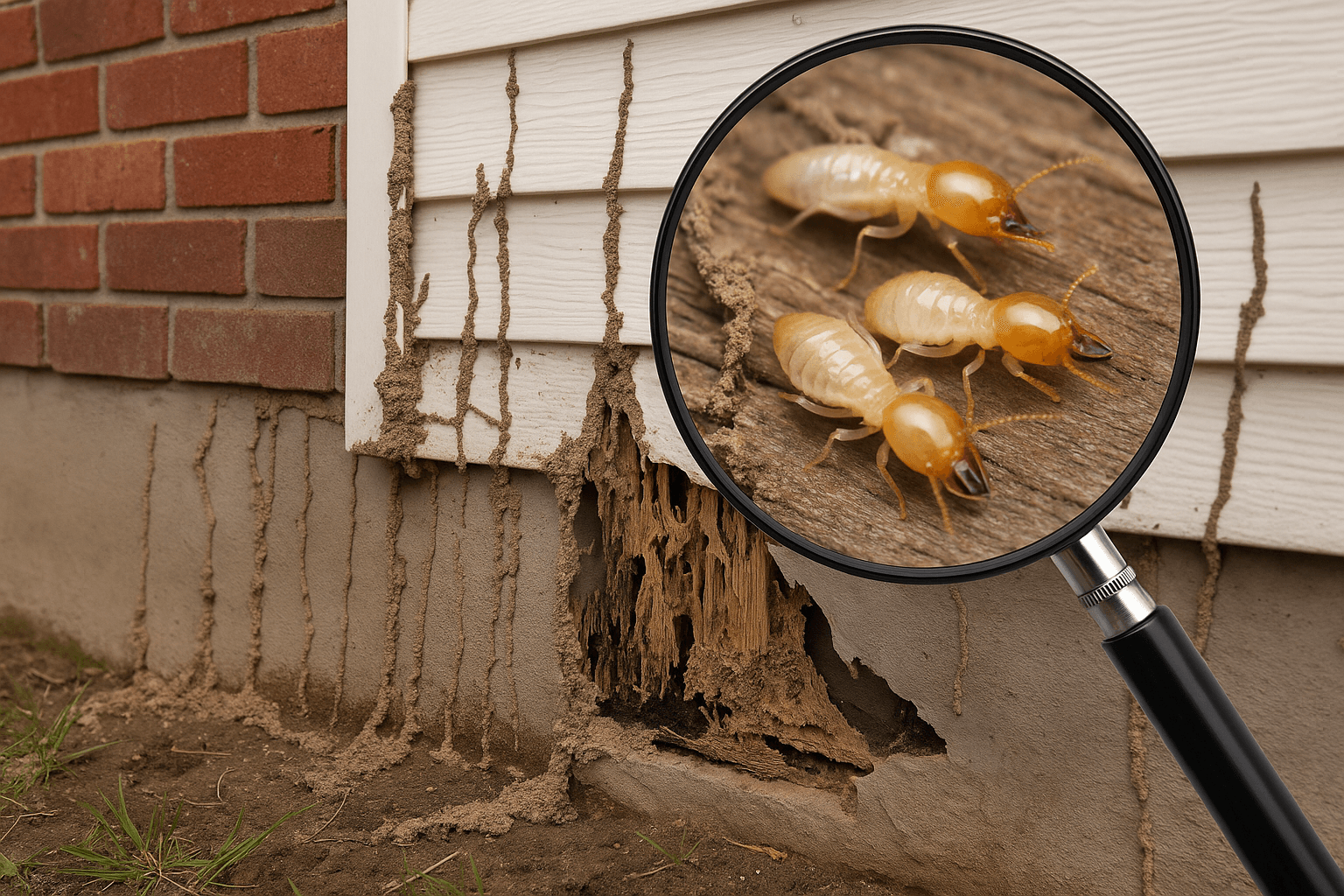
Living in the Valley of the Sun comes with a few trade-offs, doesn’t it? We get beautiful winters and stunning sunsets, but we also have to deal with blistering asphalt in July and, unfortunately, a silent army trying to eat our houses from the ground up.
The “It Won’t Happen to Me” Myth
Honestly, it’s the most common thing we hear. You buy a nice place in Gilbert or Scottsdale, maybe it’s a new build with that fresh stucco smell, and you think you’re in the clear. Termites are for old, rotting cabins in the woods, right?
Wrong.
Here’s the thing about Maricopa County: it is essentially a giant termite buffet. Our desert soil is absolutely packed with Subterranean termites. They were here long before we started pouring concrete slabs, and they aren’t going anywhere just because we built a subdivision on top of their colony. In fact, we just made life easier for them. We brought water (irrigation) and food (wood framing) right to their doorstep.
You might be thinking, “Well, I haven’t seen any bugs.” But that’s the trick. You aren’t supposed to see them. By the time you see a swarm in your living room or notice paint bubbling on the baseboards, the party has been going on inside your walls for a long time. It’s scary, I know, but ignoring it is way riskier than facing it.
What Exactly is a Risk Assessment?
Let’s clear something up. A termite risk assessment isn’t just a guy with a flashlight looking for bugs. That’s a basic inspection. An assessment is different; it’s more like a health checkup for your home’s immunity against Pests.
When we do a risk assessment, we aren’t just looking for active infestation—though finding that is obviously priority number one. We are looking for conducive conditions. These are the factors that act like a neon “Open for Business” sign to a termite colony.
It’s about connecting the dots. We look at:
- Moisture levels around the foundation (termites dry out and die without moisture).
- Wood-to-ground contact (this is basically a bridge for them).
- Cracks in the slab (even hairline fractures are highways for these guys).
- Landscaping habits (mulch is pretty, but it’s risky).
Think of it like this: A mechanic can tell you your car is broken. A good mechanic tells you that your driving habits are going to break the car in six months if you don’t change them. That’s what we do for your house.
The “Silent Destroyer” of Maricopa County
We need to talk about the specific enemy here. In Arizona, we mostly deal with Heterotermes aureus, the desert subterranean termite. They are small, pale, and incredibly persistent.
Unlike Drywood termites that might fly into an attic, these guys live underground. They build these intricate tunnel systems to stay moist while they travel. You might have seen mud tubes running up a foundation stem wall before? They look like little veins of dried clay. That’s their commute tunnel. It protects them from the dry Arizona air and the ants that want to eat them.
Here is a quick breakdown of what makes your home vulnerable versus what keeps it safe:
| Risk Factor | High Risk Scenario | Low Risk / Safe Scenario |
|---|---|---|
| Foundation | Cracks visible; foundation buried by soil | Exposed concrete (2-3 inches visible) |
| Moisture | Leaky hose bibs; AC condensation pooling | Dry perimeter; drainage directed away |
| Landscaping | Wood mulch touching the house; dense bushes | Gravel or rock barrier; plants trimmed back |
| Wood Debris | Firewood stacked against the wall | Firewood elevated and away from home |
Why Your “New” Home Isn’t Safe
This is a tough pill to swallow for a lot of folks. You move into a house built in 2020, and you assume the builder took care of it. And sure, they usually do a “pretreatment”—spraying the soil before pouring the slab.
But let me let you in on a secret regarding construction.
During the building process, that chemical barrier gets disturbed. Digging for plumbing, landscaping, moving dirt around—it all breaks the seal. Plus, the harsh Arizona sun breaks down chemicals faster than in other parts of the country. A pretreatment that should last five years might start getting patchy in three.
And let’s be real about the “slab” foundation. Concrete cracks. It shrinks as it cures. It settles when the ground shifts during monsoon season. A termite only needs a crack the width of a business card to get through. If there is wood on the other side of that crack (like your wall studs), they are in.
The Financial Sting (It’s Worse Than the Bite)
Here is a digression, but it matters. Have you looked at your homeowners insurance policy lately? Most people haven’t. If you pull it out and read the fine print, you’re going to find a nasty surprise.
Termite damage is almost never covered by insurance.
They consider it a “preventable maintenance issue.” That means if termites eat the support beams of your roof and it collapses (extreme, but it happens), you are paying for that out of pocket. We’re talking thousands, sometimes tens of thousands of dollars.
Comparing the cost of a professional risk assessment or a Preventative Treatment to the cost of structural repair is like comparing the cost of an oil change to replacing an engine. It just makes financial sense to stay ahead of it.
Red Flags You Can Spot Yourself
While you really need a pro to get the full picture, there are things you can spot while you’re doing yard work this weekend.
Mud Tubes: Look at the base of your home. If you see brown lines running up the concrete, poke them with a stick. If they crumble and you see little white bugs, call us immediately.
Hollow Wood: Tap on your baseboards or door frames. Do they sound solid? Or do they sound like paper? Termites eat wood from the inside out, leaving a thin veneer of paint. If your vacuum cleaner bumps the baseboard and punches a hole right through it, that’s a bad sign.
The “Swarmer” Wings: After a monsoon rain, usually in the evening, termites swarm to mate and start new colonies. They drop their wings once they land. If you find piles of little translucent wings on your windowsill or near the door, you’ve got activity nearby.
Stuck Windows or Doors: Sometimes, it’s just the house settling. But sometimes, it’s because the wood frames are warped from the moisture termites bring in, or the structure is compromised.
The “Weeping Screed” Issue
This is a technical term, but don’t tune out—it’s super important for Arizona homes.
If you have a stucco home (which, let’s face it, is 90% of Maricopa County), there is a metal strip at the bottom of the wall called a weeping screed. It allows moisture to escape from behind the stucco so the wood doesn’t rot.
The problem? Landscapers and homeowners love to pile dirt, rock, or pavers right up over this metal strip.
When you bury the weeping screed, you are doing two things:
- You are trapping moisture in the wall (rot).
- You are giving termites a hidden entry point where they can go from the soil, behind the stucco, and into the wood without ever building a visible mud tube.
It’s the perfect crime. During our risk assessment, checking the grade level relative to the screed is one of the first things we do. You’d be shocked how many homes fail this test.
Why DIY Solutions Don’t Cut It
I get it. We all want to save a buck. You walk into the big box store and see a bottle of “Termite Killer” for twenty bucks. You think, “I’ll just spray this around and be good.”
Here is the problem with that approach. Those sprays are repellents. If you spray them on the surface, the termites just dig deeper or go around the treated area. You aren’t killing the colony; you’re just rerouting traffic.
To actually protect a home in Arizona, you need a non-repellent transfer effect (like Termidor). This stuff is undetectable to termites. They walk through it, pick it up, and carry it back to the queen. It kills the colony, not just the scouts. But you can’t buy the heavy-duty stuff over the counter, and applying it requires trenching and drilling concrete. It’s hard work, and it requires precision.
How We Handle It at Arizona Termite Control
When you call us, we don’t just come out guns blazing. We want to understand the property.
We start with that risk assessment. We walk the perimeter. We check the stem wall. We look at the garage (a very common entry point because of expansion joints). We check the attic if needed.
If we find activity, we treat it aggressively. But if we don’t, we help you come up with a plan to keep it that way. Maybe it’s a preventative barrier. Maybe it’s just advice on fixing that drainage issue near the back patio.
We know the local pests. We know the construction styles in Phoenix, Mesa, Chandler, and Glendale. We know that caliche soil is hard to dig through, but we do it anyway because that’s what it takes to get the barrier deep enough.
It’s about peace of mind. You shouldn’t have to wonder if your walls are being eaten while you sleep.
Don’t Wait Until the Wall Crumbles
Look, nobody likes spending money on pest control. It’s not as fun as buying a new TV or upgrading the kitchen. But protecting your investment is the smartest money you can spend.
Termites are patient. They work 24 hours a day, 7 days a week. They don’t take holidays. If you haven’t had your home assessed in the last year or two, you are gambling with the structural integrity of your house.
Let’s figure out where you stand. We can identify the risks, spot the early warning signs, and put a shield around your home that actually works.
Ready to kick the termites to the curb?
Give us a ring. We’re local, we’re honest, and we hate termites just as much as you do.
Call us today at 480-660-3093
Or, if you prefer to set things up online, click here to Request a Free Inspection.
Let’s keep your home standing strong.