


Drywood termites can live in wood without a soil connection
Drywood termites are different from the soil-associated termites many Arizona homeowners recognize.2 They can establish colonies inside sound, dry wood without maintaining contact with the ground.2 They do not need the same earthen travel tubes.2 A home with no visible mud tubes can still have a drywood termite concern.2
Arizona Extension identifies the dark western drywood termite, Incisitermes minor, and the light western drywood termite, Marginitermes hubbardi, as important examples.28 UF/IFAS describes I. minor as the most common structure-infesting drywood termite in the southwestern United States.28 That does not mean every pale or dark termite seen at an Arizona home is that species.28
For a homeowner, the most useful starting points are hard pellets, the wood above them, discarded wings and the distinction between a colony inside wood and termites traveling from soil.27 Species and activity still need confirmation.27
What the insects look like
Winged adults
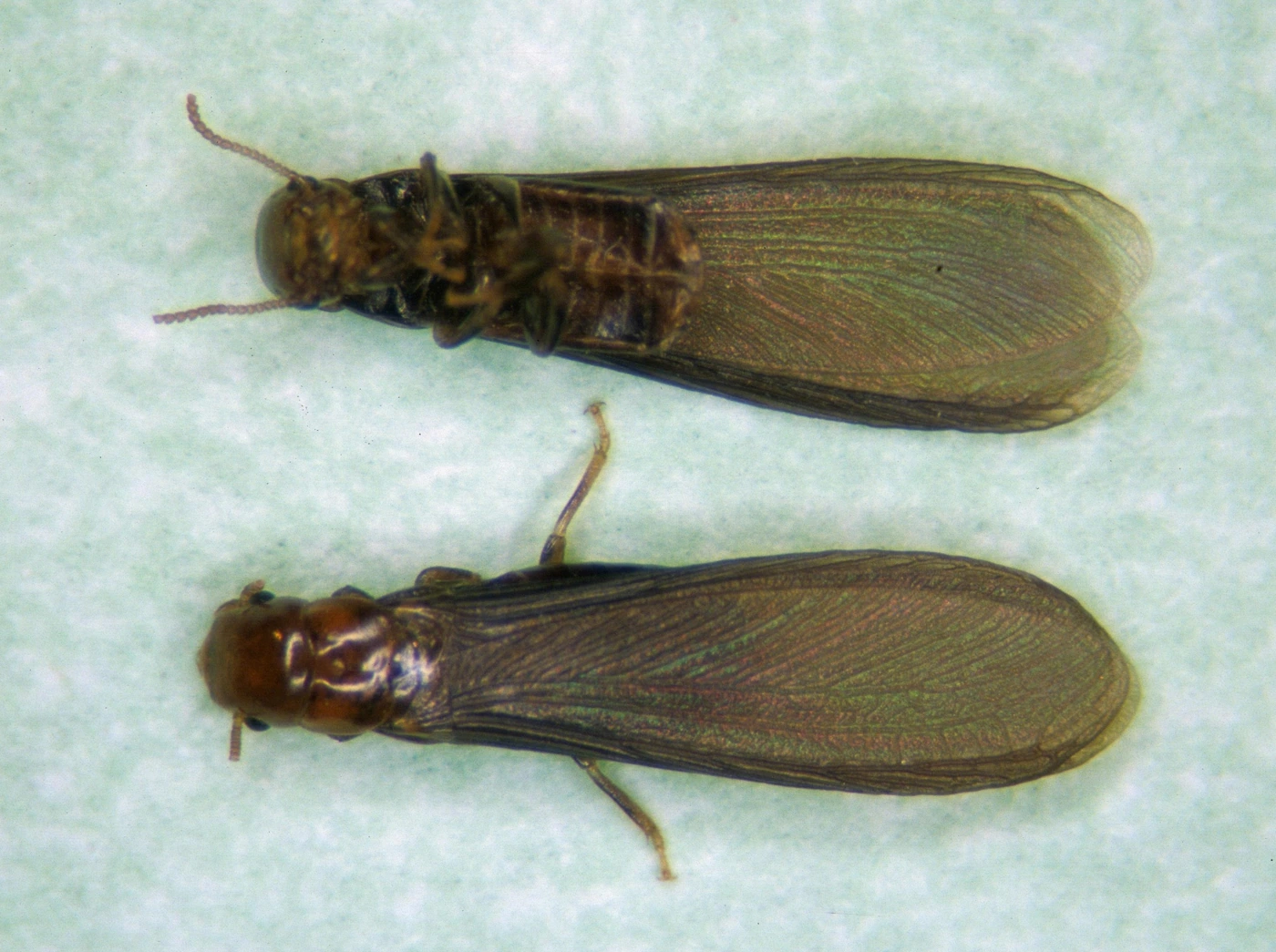
Western drywood termite swarmers commonly have an orange-brown head, a darker abdomen and smoky wings.8 UF/IFAS describes I. minor alates as 11 to 12.5 mm long including the wings.8 That measurement belongs to that species and form, not every drywood termite.8
The light western drywood termite can be much paler.23 Color alone therefore cannot separate drywood termites from all subterranean species.23 Termite swarmers generally have a broad waist, relatively straight antennae and four roughly equal-length wings.23 Winged ants have a pinched waist, elbowed antennae and longer front wings.23
Soldiers and pale immatures
Soldiers have a conspicuous hardened head and strong jaws.8 Specialist features, including antennal details, can help identify western drywood termites under magnification.8 A large-headed insect in a photograph should not be treated as a typical worker or as enough information to choose treatment.8
In most drywood species, pale immatures perform duties often associated with workers: feeding, enlarging galleries and caring for the colony.2 The University of Arizona notes that most drywood species do not have a true worker caste.2 A colony can contain insects that look quite different from its winged adults.2
The key warning sign: hard fecal pellets
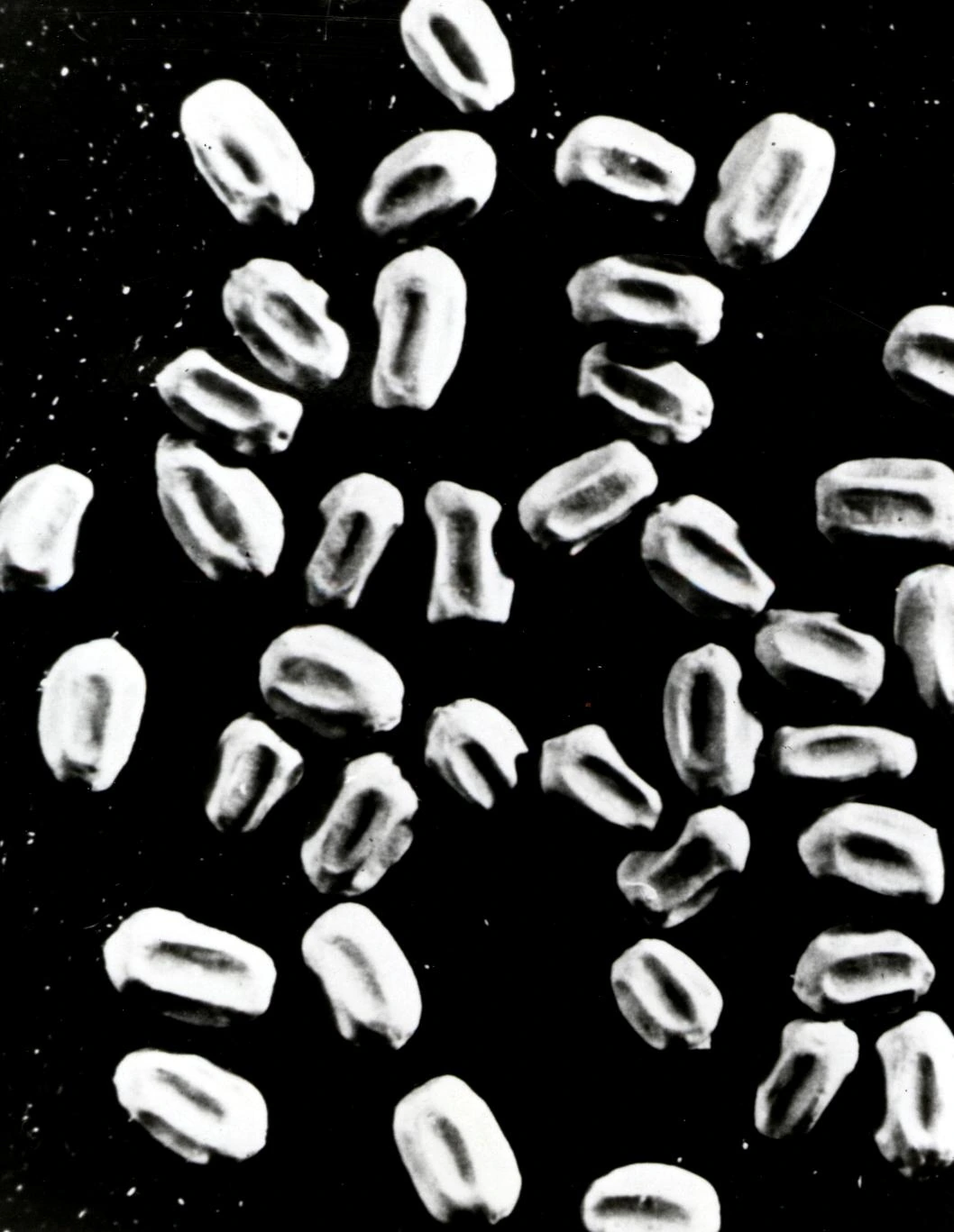
Drywood termite pellets, also called frass, are not ordinary sawdust.28 Individual pellets are small, hard and elongated, with rounded ends and six flattened or depressed sides.28 Their color can vary with the wood and the material being eaten.28 At normal viewing distance, a pile may resemble grit, sand or sawdust; magnification makes the shape more useful.28
Termites push these pellets out of their galleries through tiny openings called kick-out holes.2 Pellets can gather on a sill, floor or furniture surface below the infested wood.2 They can also scatter from an opening higher up or become caught in a web, so the place where the pile lands is not necessarily the point of origin.2
Look above the pile and photograph the wider setting.78 Do not drill into the wood or spray an opening to test your identification.78 Tiny holes may be plugged when not in use, and the absence of an obvious opening does not rule out concealed galleries.78
Pellets, powder or fibrous shavings?
Several wood-associated insects produce debris, and a small hole alone does not identify the pest.7910
| Evidence | A possible explanation | What keeps it from being a diagnosis |
|---|---|---|
| Hard, elongated pellets with distinct longitudinal faces | Drywood termites | Shape may need magnification; pellets alone do not prove current activity or extent |
| Very fine powder resembling flour or talcum powder | Certain powderpost beetles | Other beetles produce different debris; identification still matters |
| Fibrous wood shavings, sometimes mixed with other debris | Carpenter ants | Ants excavate nesting galleries rather than eating the wood; other damage may coexist |
| A round hole without clearly identified debris | Several possible wood-associated insects | Hole size and location alone do not settle the cause |
UC IPM specifically distinguishes fibrous carpenter-ant sawdust from drywood termites’ six-sided pellets.910 Its beetle guidance describes the flour-like frass of particular powderpost beetles, not every wood-boring beetle.910
Where drywood termites establish colonies
Colonies live within wood rather than depending on a route back to soil.28 Infestations can involve trim, door or window frames, eaves, fascia, rafters, beams, siding, flooring and other wooden components.28 Wooden furniture and transported wooden items can also carry an infestation.28
If the evidence appeared near a piece of furniture, identify the item separately from the home’s framing. Record when it arrived and where the pellets or insects appeared. Finding evidence near an object does not establish that the rest of the building is affected, nor that the object is the only source.
Drywood termites can feed across the grain and leave an outer shell that still looks sound.278 An apparently intact surface does not establish the condition inside the wood.278 Multiple hidden colonies or inaccessible areas can complicate inspection and treatment decisions.278
Wings and swarms: inside is different from outside
Discarded wings near windows, in webs or close to wood can be a useful clue.2 Arizona Extension treats indoor alates, particularly where doors and windows were closed, as a reason to investigate activity within the structure.2 Outdoor swarmers alone do not establish that a home is infested.2
Note the location, whether openings were present, and whether the finding recurs.23 Termites shed wings after dispersal, so loose wings and wingless reproductive adults can be part of the same event.23 Equal wing length helps distinguish termites from ants, but does not identify a drywood species by itself.23
Arizona’s published observations describe different flight timing for I. minor and M. hubbardi, including daylight versus dusk.28 Weather, species and location influence emergence.28 A sighting outside a commonly described window should not be dismissed solely because of its date, and a California or Florida swarming calendar is not an Arizona rule.28
Do pellets mean an infestation is active?
Not necessarily.7 UC IPM says pellets alone cannot establish current activity or the infestation’s extent.7 Pellets already inside galleries may be dislodged by vibration or movement, and visible debris does not reveal every concealed colony.7
Photograph the original pile and its location before cleanup.7 Note if more material appears and whether anything nearby was moved or repaired.7 Recurrence is useful inspection information, but it does not independently determine the age, size or status of the infestation.7
Keep earlier reports and treatment records available.7 A later pellet finding may reflect overlooked activity, displaced old material or another concern.7 The correct next step is to relate the finding to an inspection, not to assign a cause from the pile alone.7
What an inspection needs to answer
- Is the insect or debris actually associated with termites?
- Which accessible wooden components show evidence?
- Are there indications of current activity, past activity or an unresolved concern?
- Which areas could not be examined?
- Does the recommendation address a particular piece of wood, several locations or a broader concealed problem?
A photograph can preserve evidence and help explain where to look.27 It cannot establish the condition of concealed wood, the extent of damage or an appropriate treatment by itself.27 Arizona Extension calls for thorough inspections to confirm infestations and assess the situation.27
Prevention and treatment: scope matters
Keep unnecessary wood debris away from the home, maintain suitable screens and address accessible cracks or joints during ordinary maintenance.27 Preserve ventilation and use the appropriate building professional for repair work.27 These steps can reduce entry opportunities; coatings and other barriers are not a permanent promise of protection.27
Extension sources describe localized treatments and whole-structure methods as different approaches.7 A localized treatment depends on finding the affected areas; hidden or missed colonies are an important limitation.7 Whole-structure methods also have preparation requirements and limits, including the absence of lasting protection from some methods against later reinfestation.7
Those are general educational categories, not a statement that Arizona Termite Control offers every method.37 Inspection findings, accessibility and the proposed scope should guide the conversation.37 Confirm the actual method, preparation, product instructions, follow-up and written terms with the provider.37 Do not use this guide as a pesticide application or re-entry instruction sheet.37
When to request an inspection
Request help if you find unexplained hard pellets near wood, repeated wings or insects indoors, or new damage exposed during a repair. Include a photograph of the original evidence and a wider view of its location if you have them. You do not need to distinguish drywood from subterranean termites before asking for an inspection.
Request an inspection, explore termite inspection services, or compare subterranean termites and dampwood termites. Appointment arrangements are confirmed after the service team follows up.
Sources & further reading
General biology and identification guidance draws on university Extension and EPA publications. Some detailed Arizona species references date to 2005 or 2009; they are not a current population survey or current pesticide instructions. California and other regional examples are identified where relevant. Sources were accessed October 12, 2026.
- [2]Arizona drywood termites ↗
- [3]EPA identification and control ↗
- [7]UC IPM drywood termites ↗
- [8]UF IFAS western drywood termite ↗
- [9]UC IPM wood-boring beetles ↗
- [10]UC IPM carpenter ants ↗
Photographs are credited individually. They show the source-identified species or signs, not the results of an inspection at your property.