
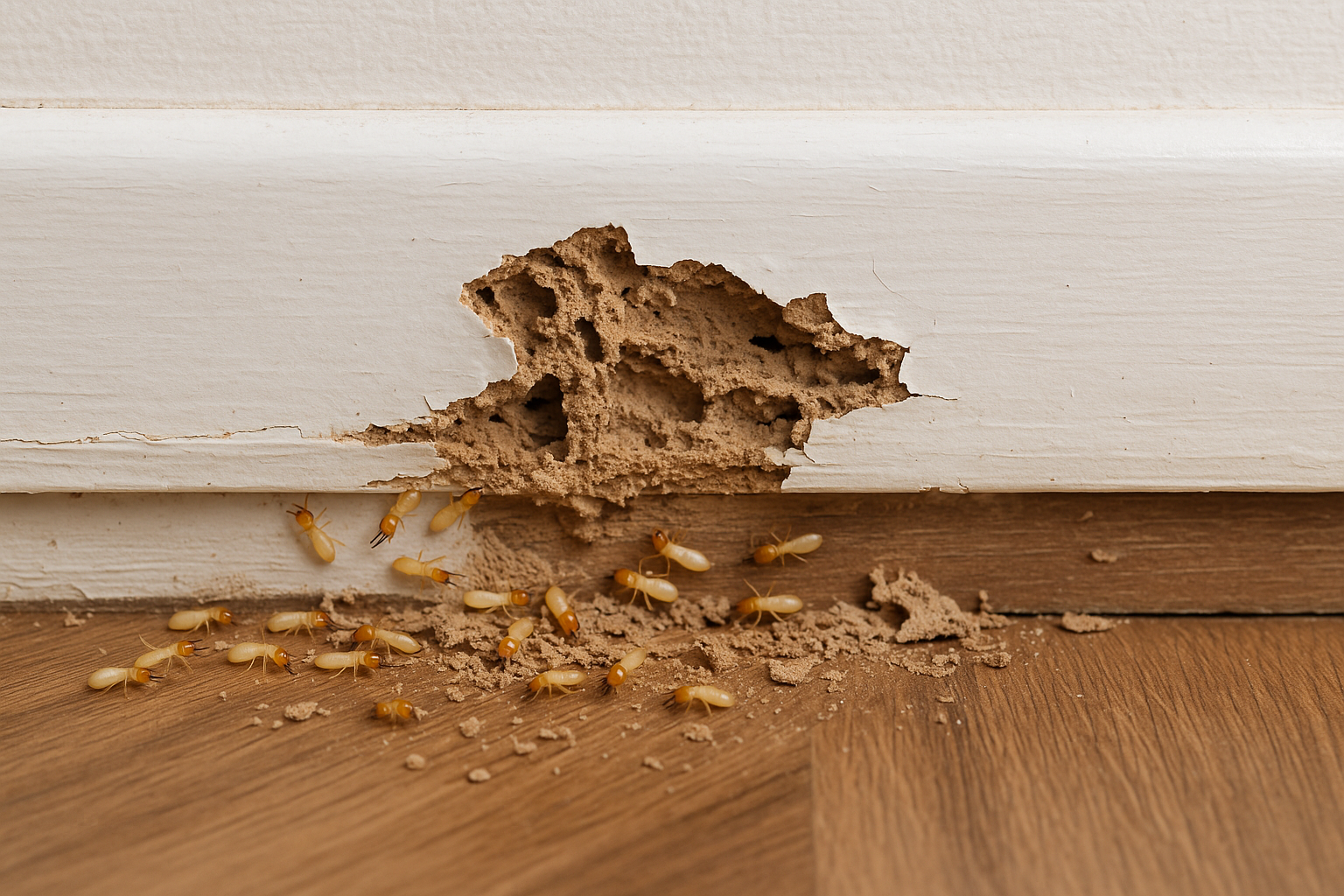
Living in the Valley of the Sun comes with a few trade-offs; we get beautiful winters and stunning sunsets, but we also inherit an environment that is absolutely teeming with Subterranean termites. Honestly, there is an old saying among us locals that isn’t just a scare tactic, it’s a statistical reality: there are two types of homes in Arizona—those that have termites and those that will get them.
Contents
- 1 The Silent Destroyers Under Your Feet
- 2 Mud Tubes: The Interstate Highway System
- 3 Blistered Paint or Drywall (That Isn’t Water Damage)
- 4 The Sound of Hollow Wood
- 5 Discarded Wings and Swarmers
- 6 Frass: The Telltale Droppings
- 7 Tight Fitting Doors and Hard-to-Open Windows
- 8 Strange Noises in the Walls
- 9 Exterior Warning Signs
- 10 The “It Won’t Happen to Me” Trap
- 11 What Should You Do If You Spot These Signs?
The Silent Destroyers Under Your Feet
You know what? It’s easy to forget about what’s going on under our foundations. We worry about the AC breaking in July or the roof leaking during a monsoon, but termites are a different beast entirely. They are the definition of a hidden threat. Unlike a burst pipe that announces itself with a puddle, termites can chew through the structural integrity of a home for years before anyone notices a thing.
In Maricopa County, we deal primarily with the desert subterranean termite. These guys are relentless. They need moisture to survive, and since we live in a desert, they build protected tunnels to travel from the moist soil up into the wood of your house. It’s a survival mechanism for them, but a nightmare for your wallet.
Here’s the thing about detection: you don’t need a PhD in entomology to spot the warning signs, but you do need to know where to look. Most homeowners miss the early red flags because they simply mistake them for settling cracks, water damage, or just general wear and tear.
Mud Tubes: The Interstate Highway System
If you take only one thing away from this, let it be this: mud tubes are the most common sign of termite activity in Arizona.
Subterranean termites have soft bodies that dry out instantly in our arid air. To survive the trek from the ground to your tasty wall studs, they construct pencil-width tunnels made of soil, wood particles, and their own saliva. It sounds gross, but it’s an engineering marvel.
You’ll usually see these irregular, vein-like lines running up your concrete foundation (stem wall) outside, or sometimes even dangling from a ceiling joist in the garage.
How to check a mud tube:
- Locate the tube: Look around the exterior base of your home.
- Break a small section: Use a stick or a screwdriver to scrape away about an inch of the tube.
- Wait and watch: Check back in a few days. If the tube has been repaired, you have an active infestation. If it stays broken, the termites might have moved on—but that doesn’t mean they left the house; they might just be using a different route.
Blistered Paint or Drywall (That Isn’t Water Damage)
This one is tricky. I’ve seen countless homeowners call a plumber because they swore they had a leak inside a wall. They see bubbling paint or wallpaper that looks uneven and sunken, and naturally, they assume moisture intrusion from a pipe.
But sometimes, plumbing has nothing to do with it.
When termites consume drywall or the wood behind it, they leave the outer layer of paint or paper intact because they don’t want to be exposed to the light or air. This leaves a thin, hollow veneer. As they bring moisture up into the walls to create their humid environment, that moisture causes the paint to bubble or peel.
If you have bubbling paint but no source of water nearby, don’t just scrape it and paint over it. Press on it gently. If your finger goes right through, or if you find what looks like dirt behind that paint, you need to call a pro immediately.
The Sound of Hollow Wood
Wood should sound solid. That seems obvious, right? But termites eat wood from the inside out, following the grain. They are picky eaters; they devour the softer springwood and leave the harder summerwood alone. This leaves the timber looking perfectly normal on the outside while being structurally comprised on the inside.
Here is a simple test you can do this weekend. Go around your house—specifically checking baseboards, window frames, and door jams—and give them a tap with the handle of a screwdriver.
What you are listening for:
- Solid Thud: Good news. This is dense, healthy wood.
- Papery, Hollow Echo: Bad news. This implies the interior of the wood has been excavated.
If the wood crumbles when you touch it or feels spongy, the damage is likely extensive. It’s frustrating because by the time the wood is crumbling, the colony has likely been there for a while.
Discarded Wings and Swarmers
Let’s talk about the birds and the bees… or rather, the ants and the termites.
Usually, termites stay hidden. But once a colony reaches a certain maturity and size, it decides it’s time to expand. They produce winged reproductives called “alates,” or swarmers. These guys have one job: fly out, find a mate, lose their wings, and start a new colony (preferably not in your house, but often it is).
In Arizona, swarming often happens after a rain event, particularly during our spring showers or the summer monsoon season. You might see hundreds of flying insects around your porch light or emerging from a crack in the patio.
Many people confuse these for flying ants. It’s an easy mistake to make, but the distinction is crucial.
| Feature | Termite Swarmer | Flying Ant |
|---|---|---|
| Waist | Broad, straight waist (no “pinched” look) | Pinched, wasp-like waist |
| Antennae | Straight, beaded antennae | Elbowed or bent antennae |
| Wings | Four wings of equal length | Front wings are longer than back wings |
Even if you miss the swarm itself, you might find the evidence. Termites shed their wings almost immediately after landing. If you find piles of silvery, scale-like wings on your windowsills or near the front door, it’s a massive red flag.
Frass: The Telltale Droppings
Okay, this part is a bit unpleasant. While subterranean termites use their droppings to build mud tubes, Drywood termites—which are less common in Arizona but still present—do things differently. They don’t need contact with the soil, so they live entirely inside the wood.
Since they don’t use their waste for construction, they have to get rid of it. They kick their fecal pellets out of small “kick-out holes” in the wood.
This waste is called frass. To the untrained eye, it looks like a small pile of sawdust, coffee grounds, or sand. You might find these little mounds accumulating on the floor underneath a piece of wooden furniture or near a baseboard.
If you clean it up and it reappears a few days later, you aren’t dealing with regular dust. You have active drywood termites pushing waste out of their galleries.
Tight Fitting Doors and Hard-to-Open Windows
Have you ever had a door that just suddenly starts sticking? Or a window that requires Herculean strength to slide open?
We usually blame the weather. “Oh, it’s humid today,” we say. And while humidity does cause wood to expand, it shouldn’t be a permanent issue in a climate as generally dry as Phoenix.
Termites produce moisture when they eat and tunnel. This metabolic moisture gets absorbed by the wood framing of your doors and windows, causing them to warp and swell. If your doors are jamming and you can’t find a logical reason for it, it might be because the frame is being eaten and warped simultaneously.
Strange Noises in the Walls
This might sound like the start of a ghost story, but hear me out. If the house is dead quiet, sometimes you can actually hear termites.
There are two sounds to listen for:
- Head Banging: When soldier termites sense a threat, they bang their heads against the gallery walls to warn the colony. In a heavy infestation, this can sound like a faint rattling or clicking noise coming from the wall.
- Munching: It sounds crazy, but if you put a stethoscope to a wall with a major infestation, you can hear the workers tearing away at the wood fibers.
It’s unlikely you’ll hear this over the TV or the AC running, but late at night? It’s possible. And honestly, it’s a sound you never want to hear.
Exterior Warning Signs
Sometimes the problem starts in the yard before it hits the house. Termites are nature’s recyclers; they are just looking for cellulose. If you make it easy for them, they will come.
Take a walk around your property. Do you have wood-to-ground contact? This is the number one no-no in Arizona construction and landscaping.
- Trellises: Is that wooden trellis touching the dirt?
- Firewood: Do you stack firewood right up against the side of the house? That is essentially building a bridge for termites to cross directly into your home.
- Tree Stumps: Old, rotting tree stumps are termite magnets. Once they finish the stump, they’ll look for the next closest food source—which is likely your framing.
Also, keep an eye on your cactus. Strange, right? But termites will attack dried or struggling cacti and agave in your yard. If you see mud tubes on your landscape plants, the colony is close enough to threaten your foundation.
The “It Won’t Happen to Me” Trap
We see it all the time. Homeowners think that because they have a brick or stucco home, they are safe. But here is the reality check: almost every home in the valley is framed with wood. Even if you have a block wall, the interior walls, the roof trusses, and the baseboards are wood.
Termites are incredibly efficient at navigating through cracks in concrete thinner than a credit card to get to that wood. Ignoring these signs doesn’t make them go away; it just gives the colony more time to grow.
What Should You Do If You Spot These Signs?
If you nodded your head at any of these points, or if you just realized you haven’t had an inspection since you bought the place, don’t panic. Panic leads to bad decisions.
However, do not ignore it. Termite damage is rarely covered by standard homeowners insurance, meaning every day you wait could be costing you money out of pocket. DIY treatments from the hardware store are rarely effective against established colonies because they don’t reach the queen or the heart of the nest deep underground. You need industrial-grade solutions and local expertise.
Arizona Termite Control has been protecting homes in Maricopa County for years. We know exactly how these desert termites operate, and more importantly, we know how to stop them cold. Whether it’s a Preventative check-up or an all-out battle against an infestation, we have the tools to protect your biggest investment.
Don’t let the “silent destroyers” eat away at your peace of mind.
Contact Us today to schedule your service:
→ Call us directly: 480-660-3093
→ Or Click Here to Request a Free Inspection