


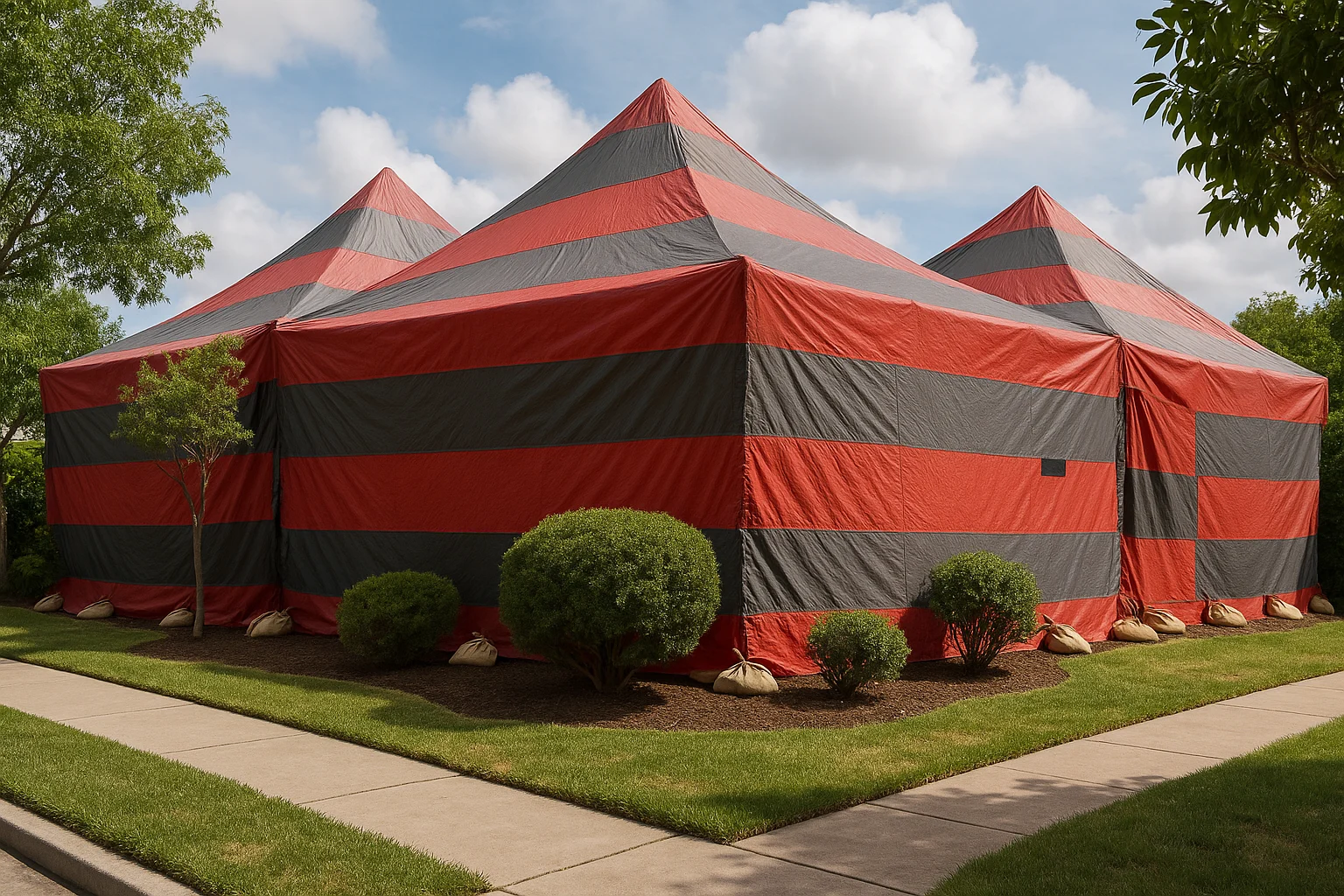
Structural fumigation is a specialist whole-structure treatment described here for general education. If your request requires fumigation, explain that requirement before booking so specialist availability and scope can be confirmed. A homeowner inspection, a drywood termite diagnosis and a recommendation for whole-structure work are separate decisions.
Start with identification and scope
Drywood termites can live inside wood without a soil connection. Subterranean termites and moisture-supported termite concerns require different investigation. A pellet pile, photograph or damaged board alone does not establish the extent of hidden activity. Ask the inspector what evidence was found, which areas were accessible and what remains uncertain.
UC IPM distinguishes localized drywood treatments from whole-structure approaches. Finding all affected areas is a central limitation of localized work. The choice should follow the identified termite, infestation scope, access and provider’s capabilities, not an automatic package recommendation.
What a whole-structure approach means
Fumigation is not the same as spraying an exposed insect or treating soil around the foundation. It uses a fumigant under a specialist provider’s controlled process. It has significant preparation, access and occupancy requirements. Do not attempt structural fumigation yourself or substitute consumer foggers for a professional plan.
No treatment should be described as guaranteed permanent protection. Extension guidance explains that fumigation does not leave residual protection against a later drywood infestation. Ask how follow-up is handled and what any written agreement actually covers.
Preparation comes from the actual provider
The fumigation provider should supply written instructions for the property and product. Those instructions may address people, pets, food, medicines, plants, access and other materials. Requirements depend on the job; this article is not a packing checklist, application procedure or clearance instruction.
Ask who is responsible for each preparation task, how completion is checked and who can resolve questions before work begins. For an occupied rental or business, identify the authorization contact and coordinate instructions with everyone affected. Never assume an absent owner means preparation is unnecessary.
Do not use a calendar or smell as clearance
The provider must complete the applicable clearance process and authorize re-entry. Do not use an absence of odor, a generic number of days or a casual comparison with outside air to decide that a building is ready for occupancy. Follow the actual provider’s written directions.
Confirm who will communicate clearance and any remaining restrictions. If circumstances change during the job, use the responsible provider’s instructions rather than advice copied from another property.
Questions before approving work
- Which termite and findings support the recommendation?
- Which structures and areas are included?
- What access limitations or concealed areas remain?
- Who performs and authorizes the specialist work?
- What preparation, clearance and follow-up are included?
- What are the price, cancellation, renewal and written protection terms?
Treatment is not structural repair
Pest treatment does not restore damaged lumber or certify structural safety. If damage may affect the building’s safety, involve the appropriate building professional. Coordinate proposed repairs with the termite work so evidence and treatment access are not covered prematurely.
Arrange an inspection before choosing a method
Describe what you noticed, where it appeared and any past treatment. Keep photographs and reports available. You do not have to identify the species before asking for help. Appointment arrangements and any specialty service must be confirmed after follow-up.
Further reading
General method limitations are discussed in UC IPM’s drywood termite guidance. Use the actual product label and provider instructions for a job, not older treatment recipes or numerical thresholds from an article.