


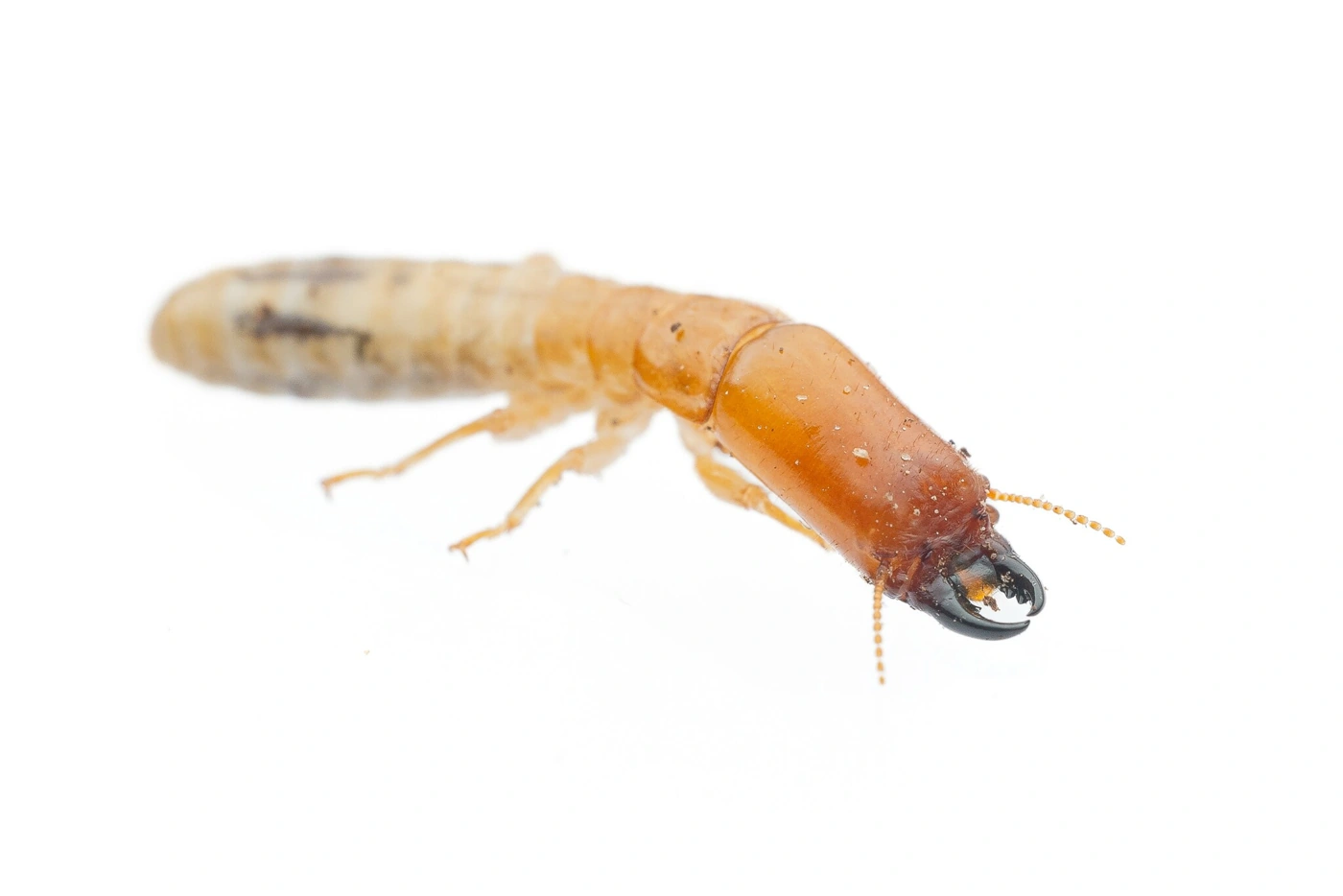
Arizona dampwood termites need an Arizona explanation
“Dampwood termite” is a useful common-name group, but it does not describe one identical insect everywhere.5 Arizona Extension lists the desert dampwood termite, Paraneotermes simplicicornis, and the southern rottenwood termite, Zootermopsis laticeps, among Arizona’s termites.5 Photographs of coastal species should not be substituted for either one without a clear label.5
For the Phoenix-area homeowner, subterranean termites remain the main structural concern emphasized in Arizona’s species guide.5 The same publication describes P. simplicicornis as a minor structural pest, rarely found in dwellings.5 “Rare” does not mean harmless: susceptible moist posts, poles and wood can still be damaged.5
This guide focuses first on the desert dampwood species, then separates the coastal examples you may encounter in other identification articles.567 The key is to identify both the insect and the conditions supporting it, not to apply every dampwood statement from a wet coastal region to an Arizona home.567
Where desert dampwood termites live and feed
Despite the word “desert,” P. simplicicornis needs more wood moisture than ordinary ambient humidity supplies.5 Arizona Extension describes it attacking moist wood below ground and nesting in and around that food source.5 Its habitat can involve buried wood and damp soil, not simply a colony isolated in a dry board above ground.5
Reported susceptible material includes untreated poles and fence posts, moist buried wood, desert shrubs and some young trees.56 Arizona’s handbook also discusses feeding that affects wood below the soil line.56 These examples describe where the species can feed; finding damage at a post does not automatically establish activity in the house.56
A particularly important qualification comes from the Arizona handbook: activity can extend into sound, dry wood several meters away from a moisture source.6 Dry-looking wood therefore does not rule out a moisture-supported colony elsewhere.6 The inspection needs to consider the source as well as the board where the evidence was found.6
What the different forms look like
Immatures carrying out worker duties
The Arizona account describes pale immatures with distinctively spotted or mottled abdomens.56 They perform worker duties within the colony.56 That appearance is an identification clue, not a stand-alone test from a distant photo or an image with uncertain color and scale.56
Soldiers
Desert dampwood soldiers have brown or yellowish-brown, low, relatively flat heads and short mandibles that are wider near their base.56 Antennal details are among the specialist characteristics described in Arizona’s identification materials.56
The Arizona publications give conflicting soldier-length figures.56 Instead of offering a misleading combined size range, use the photograph to understand the form and have a specimen checked where identification matters.56 A large head or prominent jaws alone does not distinguish this species from every other soldier termite.56
Winged reproductive adults
The species account describes dark-brown bodies and wings.35 Termite swarmers generally have a broad waist, relatively straight antennae and two pairs of approximately equal-length wings.35 They can shed the wings after dispersal.35 Those general traits help separate termites from ants, but do not identify P. simplicicornis by themselves.35
Arizona’s published observations describe flights at dusk during warmer months, not necessarily only after rain.5 Timing varies, so a calendar is context rather than a reason to reject or confirm a sighting.5
Signs that deserve a closer look
Insects associated with damp or deteriorated wood
Report termites seen in wood near a known leak, buried wood, a damp post or another moisture source.5 Keep the location specific: a fence post, an exterior doorframe and a wall inside the home are different observations.5 The Arizona guide records occasional dwelling concerns associated with moist or wet wood.5
Moisture or rot alone is not an insect identification. Water damage, fungal deterioration and termite feeding can require different assessments. A pest inspection and a building repair may both be needed, with neither replacing the other.
Large galleries and pellet material
Arizona’s handbook describes desert dampwood damage as large, open, irregular tunnels containing fecal pellets.6 It describes those pellets as smoother and moister than typical drywood pellets.6 The debris may be less familiar than the neat hard pellet piles associated with drywood termites.6
Do not assign a species from a dark or damp pile of debris alone.7910 The photographs and descriptions are a way to explain a concern, not proof of current activity or the extent of concealed damage.7910 Pellets can remain after circumstances change, and other insects can produce wood-associated debris.7910
Evidence near a moisture source, even if the next board looks dry
Tell the inspector about the leak, drainage issue or irrigation condition as well as the insect evidence.6 Because desert dampwood activity can extend away from its moisture source, checking only the visibly wet surface can leave part of the question unanswered.6
Do not open walls, dig around utility services or enter an unsafe underfloor area to track the source. Record what is safely visible and have the appropriate professionals address access, pest identification and repair needs.
How to distinguish the clues without overclaiming
| Finding | What it can suggest | What it cannot establish alone |
|---|---|---|
| Termites in moist wood associated with damp soil | A moisture-supported termite concern, including possible desert dampwood activity | The species, the condition of nearby buildings or the infestation’s extent |
| Large irregular galleries containing smoother pellet material | A clue described for desert dampwood termites | Current activity without examining the evidence in context |
| Earthen shelter tubes at the building | A strong reason to investigate subterranean termite activity | The exact species or whether every tube remains occupied |
| Hard, ridged pellets expelled from wood | A drywood termite clue | That every visible pellet is recent or that all concealed colonies have been located |
These distinctions come from Arizona species descriptions and general inspection guidance.567 Do not turn them into absolute rules such as “all dampwood termites have no soil connection” or “every dampwood colony stays in one piece of wet wood.” The Arizona desert species is an important exception to those oversimplifications.567
Why coastal dampwood photographs can confuse an Arizona homeowner
UC IPM discusses Zootermopsis angusticollis and Zootermopsis nevadensis in California, including their association with high-moisture wood.57 That discussion concerns those species and regions.57 It should not be used to overwrite Arizona’s description of P. simplicicornis, which can nest around moist belowground food sources.57
The Arizona Z. laticeps photograph in this library is a different species from desert dampwood termites. The Pacific dampwood photographs are explicitly labeled as non-Arizona comparisons. Neither image is presented as a diagnostic match for an insect at your home.
This is also why color, size and a generic “dampwood” image are not enough.56 Caste, species and moisture context matter.56 If a photograph looks similar but the source names another species, keep that distinction rather than assuming the common name settles the identification.56
Investigate the moisture source and the affected wood
If moisture is present, the useful question is how it is reaching the material.13 A plumbing leak, roof leak, irrigation pattern, poor drainage or wood contacting damp soil can each require a different repair.13 General prevention guidance supports correcting leaks and drainage and reducing unnecessary wood-to-soil contact.13
An apparently dry surface after a repair is not a complete assessment of concealed material or a remote moisture source.6 Explain what was repaired, when it was done and where insect evidence was observed.6 Keep photographs from before replacement or cosmetic work if they are available.6
Correction of moisture conditions is important, but this guide does not promise that a particular repair eliminates every termite concern.56 Identification, the affected area, access and the proposed scope need to be established for the property.56
A safe homeowner checklist
- Photograph the insect or debris in place, with a wider view showing the affected wood.
- Note whether the location is indoors, at the structure, at a post or only in outdoor material.
- Record known leaks, standing moisture and recent repairs without assuming they identify the insect.
- Gather inspection reports and treatment information for that part of the property.
- Keep safe access available and request identification before choosing treatment.
Do not apply a pesticide recipe, seal a suspected problem behind a finish or enter a deteriorated space based on this guide. A termite assessment does not establish the structural safety of damaged wood.
When to request an inspection
Request an inspection when you find termites, unfamiliar pellets or unexplained wood damage, especially where moisture is involved. You do not have to decide whether the insect is dampwood, drywood or subterranean before contacting us. Describe what you saw and where; the inspection can put the evidence and conditions together.
Request an inspection, read about termite inspections, or compare the subterranean guide and drywood guide. Any repair needs and treatment recommendations should be explained for the actual property, with appointment arrangements confirmed after follow-up.
Keep these species and locations separate
The desert dampwood photograph above is an Arizona example of Paraneotermes simplicicornis. These photographs show other named dampwood species. Their appearances and pellet examples must not be substituted for an identification of that species.
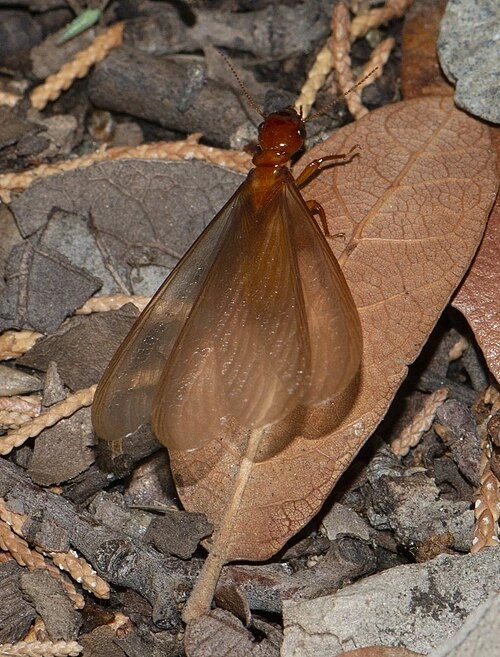
Zootermopsis laticeps, an Arizona rottenwood termite, photographed in Arizona. This is not the desert dampwood species Paraneotermes simplicicornis discussed below.
Photo: © Owen Ridgen. Source · CC BY 4.0. Full-frame image, resized and converted for web display.
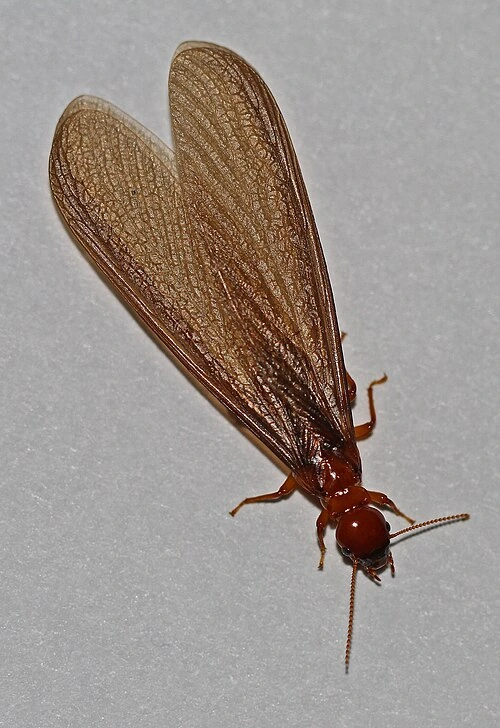
Pacific dampwood termite (Zootermopsis angusticollis), photographed in British Columbia. A comparison species, not an Arizona desert dampwood diagnostic match.
Photo: © Judy Gallagher. Source · CC BY 2.0. Full-frame image, resized and converted for web display.
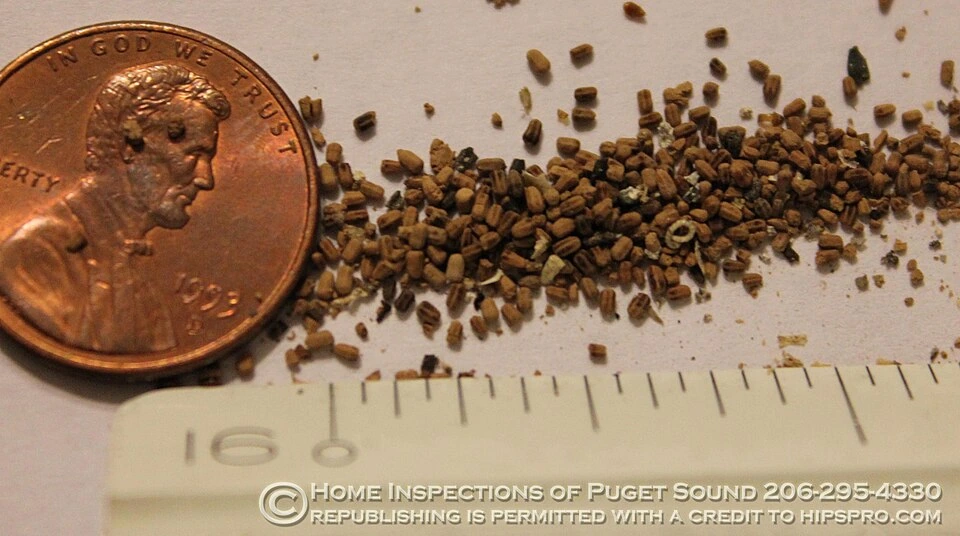
Pacific dampwood termite pellets with a scale reference, identified by the photographer as Zootermopsis angusticollis. This non-Arizona example must not be used to identify desert dampwood termites.
Photo: © JJ Greive of Home Inspections Of Puget Sound. Source · CC BY-SA 3.0. Full-frame image, resized and converted for web display.
Sources & further reading
General biology and identification guidance draws on university Extension and EPA publications. Some detailed Arizona species references date to 2005 or 2009; they are not a current population survey or current pesticide instructions. California and other regional examples are identified where relevant. Sources were accessed October 12, 2026.
- [1]Arizona termite management ↗
- [3]EPA identification and control ↗
- [4]UC IPM subterranean and other termites ↗
- [5]Arizona termites of economic importance ↗
- [6]Arizona structural pests handbook ↗
- [7]UC IPM drywood termites ↗
- [9]UC IPM wood-boring beetles ↗
- [10]UC IPM carpenter ants ↗
Photographs are credited individually. They show the source-identified species or signs, not the results of an inspection at your property.