
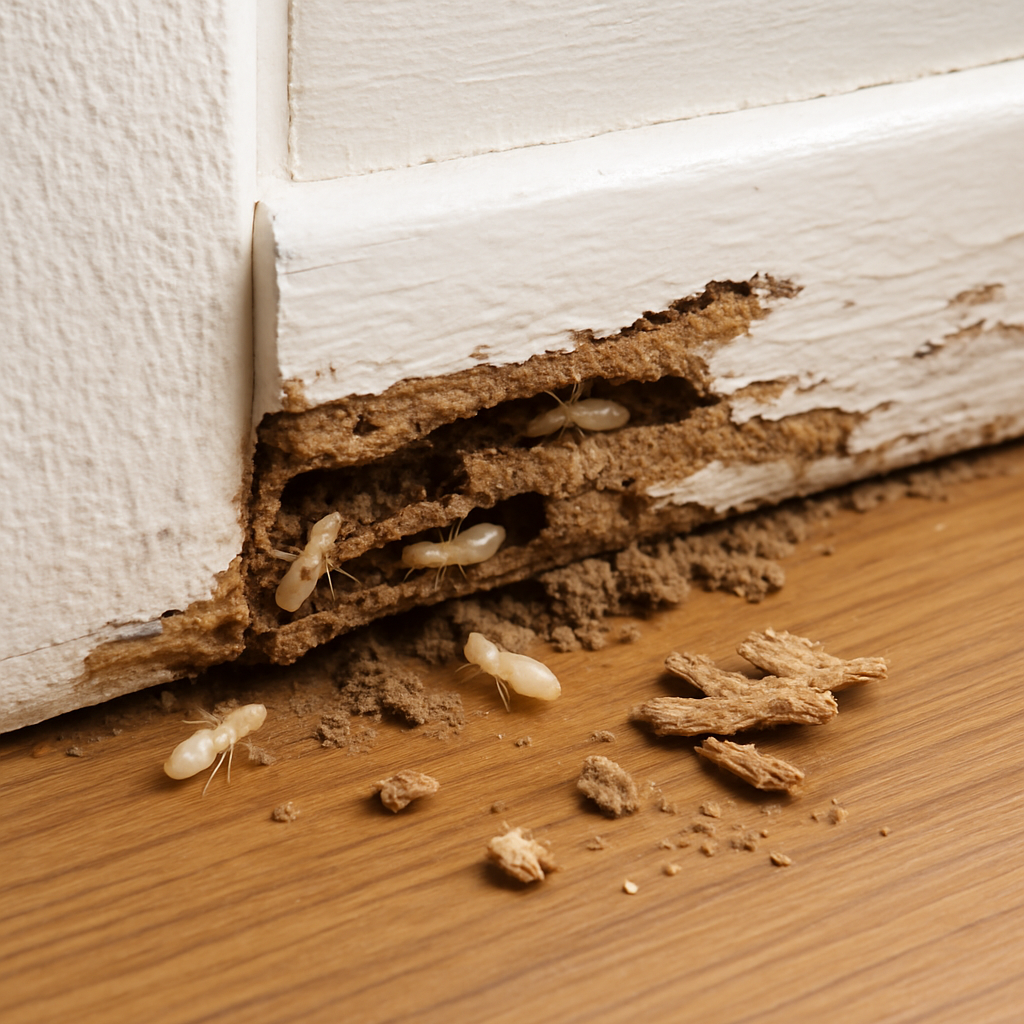
You know the old saying here in the Valley: there are two types of homes in Arizona—those that have termites, and those that are going to get them. It sounds a bit dramatic, sure, but when you’ve lived in Maricopa County long enough, you realize it’s uncomfortably close to the truth. Living in the desert means enjoying beautiful sunsets and mild winters, but it also means dealing with Pests that are just as tough and persistent as the cactus growing in your front yard.
Contents
Wait, I Thought Termites Liked Moisture?
Here’s the thing that confuses a lot of people. You might be thinking, “We live in a desert. Don’t termites need water?” Honestly, that’s a fair question. While it is true that termites require moisture to survive, the species we deal with most often here—the Subterranean Termite—is incredibly adaptive. They don’t need a swamp; they just need a way to bring the moisture with them.
See, these little guys live underground (hence the name) where the soil stays relatively cool and damp, even when it’s 115 degrees out on the asphalt. They build extensive colony networks under your slab foundation. When they get hungry and decide your framing studs look like a five-course meal, they construct these little airtight tunnels to travel through. It’s basically their version of an air-conditioned hallway.
So, don’t let the dry heat fool you. In fact, our specific desert variety, Heterotermes aureus, is one of the most destructive structural pests in the Southwest. They are relentless, and because they attack from the ground up, you often won’t see them until they’ve already thrown a pretty wild party inside your walls.
The Dead Giveaway: Mud Tubes
If you only remember one thing from this guide, make it this: mud tubes are the smoking gun.
Since subterranean termites die if they dry out, they build these shelter tubes out of soil, wood particles, and their own saliva (gross, I know) to travel safely from the ground to the wood in your house. They usually look like little brown veins running up your foundation.
Go take a walk around the perimeter of your house. I mean really look. Check the concrete stem wall where it meets the stucco. Look around the garage door frame. Sometimes these tubes are thin, like the width of a pencil, but I’ve seen them get wide and flat, almost like a fan.
Where to look specifically:
- Foundation edges: Right where the concrete meets the dirt.
- Expansion joints: Cracks in the garage floor or patio.
- Utility pipes: Look where water or gas lines enter the home. Termites love to use pipes as a highway ramp.
If you spot one, you might be tempted to scrape it off to see if there are bugs inside. You can do that—if you see creamy-white workers scurrying back into the hole, you have an active infestation. But even if it’s empty, don’t celebrate yet. Termites often abandon tubes and build new ones nearby. An old tube is still proof that your home is on their radar.
The “Invisible” Damage Inside
Here is where it gets tricky. Termites are cryptic insects. They are specifically evolved to stay hidden. They eat wood from the inside out, leaving a thin veneer of paint or wood on the surface so no one knows they are there. It’s actually kind of impressive if you ignore the fact that they are destroying your biggest investment.
You might have wood damage right in front of your face and not realize it. Have you ever looked at a baseboard or a window sill and thought it looked a little… lumpy? Maybe the paint is bubbling or blistering?
A lot of homeowners in Phoenix see that and think, “Oh, must be a little water damage from a leaky window.” And sometimes it is. But often, it’s termites.
Here is a simple test you can do. Take the handle of a screwdriver and gently tap on your baseboards or exposed wood framing. Does it sound solid and sharp? Or does it sound dull and hollow, like tapping on a cardboard box? If you hear that hollow thud, or if your screwdriver accidentally punches right through the wood with zero resistance, you’ve got a problem. They have eaten the cellulose (the structural fiber) and left you with a shell.
Frass: It’s Not Just Dust
Let’s talk about droppings. In the pest control world, we call it frass.
Now, this is more common with Drywood Termites (which we also have in Arizona, though they are less common than their subterranean cousins). Unlike the subterranean guys who use their poop to build mud tubes, drywood termites like to keep their tunnels clean. They kick their droppings out of little “kick-out holes.”
To the untrained eye, frass looks exactly like sawdust or coffee grounds. You might find a little pile of it on a window sill, on the floor by the baseboard, or even on your bedspread if there are exposed beams above.
What does it look like?
- Shape: Tiny, hard pellets.
- Color: Can vary from tan to dark brown, depending on the wood they’re eating.
- Texture: Gritty.
If you clean it up and it comes back a few days later, that’s not house dust. That is a colony actively working above you. It’s easy to dismiss this stuff. We all have dust in our homes, especially during haboob season. But distinct, gritty piles are a major red flag.
The Swarmers: When Termites Take Flight
Most of the time, termites stay hidden underground or inside wood. But once or twice a year, usually during our spring rains or the summer monsoon season, the colony decides it’s time to expand. They produce winged reproductives called swarmers (or alates).
This is usually the only time you will see termites out in the open. And honestly, it can be terrifying. You might walk into your kitchen and find hundreds of flying insects around your light fixtures or crawling on your window glass.
The problem is, people often confuse these with flying ants. It happens all the time. Ant swarmers and termite swarmers look similar at a glance, but if you look closer, the differences are night and day.
Here is a quick breakdown to help you tell them apart:
| Feature | Termite Swarmer | Flying Ant |
|---|---|---|
| Waist | Broad, thick waist (no pinching) | Pinched, wasp-like waist |
| Antennae | Straight or slightly curved | Elbowed (bent like an arm) |
| Wings | All four wings are equal length | Front wings are longer than back wings |
| Body Shape | Cigar-shaped | Hourglass-shaped |
If you see these guys inside your house, it usually means there is a mature colony somewhere very close—possibly directly under your foundation. Finding just the discarded wings on a window sill is also a sign. They shed their wings once they find a mate and settle down.
Listen Closely… No, Really
This might sound like something out of a horror movie, but if the infestation is heavy enough, you can actually hear them.
Soldier termites have a habit of banging their heads against the wood when they sense danger. It sends vibrations through the colony to warn the others. It sounds like a very quiet clicking or rustling noise coming from the wall.
I remember visiting a home in Scottsdale a few years back where the owners thought they had mice in the walls because of the scratching sounds. Turned out, it was a massive termite infestation munching away on the wall studs. So, if your house is making noises at night, don’t just blame the house settling.
Also, keep an eye out for tight-fitting doors and windows. When termites eat wood, they introduce moisture (remember, they bring it with them). This causes the wood to swell. If a door that used to close perfectly suddenly starts sticking, or a window becomes hard to open, it might be structural warping caused by termite activity.
Why The “Stucco Blind Spot” is Dangerous
I want to circle back to something specific about Arizona homes. We love our stucco. It’s great for insulation and looks nice. But for a termite inspector, stucco can be a challenge if you don’t know what to look for.
Stucco often goes all the way down into the dirt. This is a construction flaw, technically, but it’s very common. When the stucco touches the soil, it gives termites a perfect, protected bridge into your home. They can travel behind the stucco layer and enter the wall void without ever building a visible mud tube on the exterior.
This is why we always tell homeowners that checking for mud tubes is great, but it’s not foolproof. You could have a clean perimeter and still have activity behind the walls. It’s sneaky, right? That’s why we use specialized moisture meters and sounding tools to check areas that the naked eye can’t see.
Taking Action: When to Call the Pros
Look, I’m all for DIY home maintenance. I change my own air filters and I fix my own leaky faucets. But when it comes to termites in Arizona, “keeping an eye on it” is not a strategy. It’s a gamble.
Termites don’t take breaks. They work 24/7. By the time you see the paint bubbling or the mud tubes climbing the wall, the damage has already started. And since home insurance rarely covers termite damage (check your policy, but don’t get your hopes up), the repairs are coming out of your pocket.
If you found yourself nodding along to any of the signs in this article—the hollow wood, the mud tubes, the mystery sawdust—it is time to get a professional set of eyes on the property.
At Arizona Termite Control, we know exactly how these desert pests operate. We know the difference between a settling crack and a termite entry point. We have the tools to detect activity behind those thick stucco walls and under that post-tension slab.
Don’t let these silent destroyers eat away at your home’s value. Peace of mind is just a phone call away.
Ready to kick the termites out?
Call us today at 480-660-3093
Or click here to [Request a Free Inspection]