
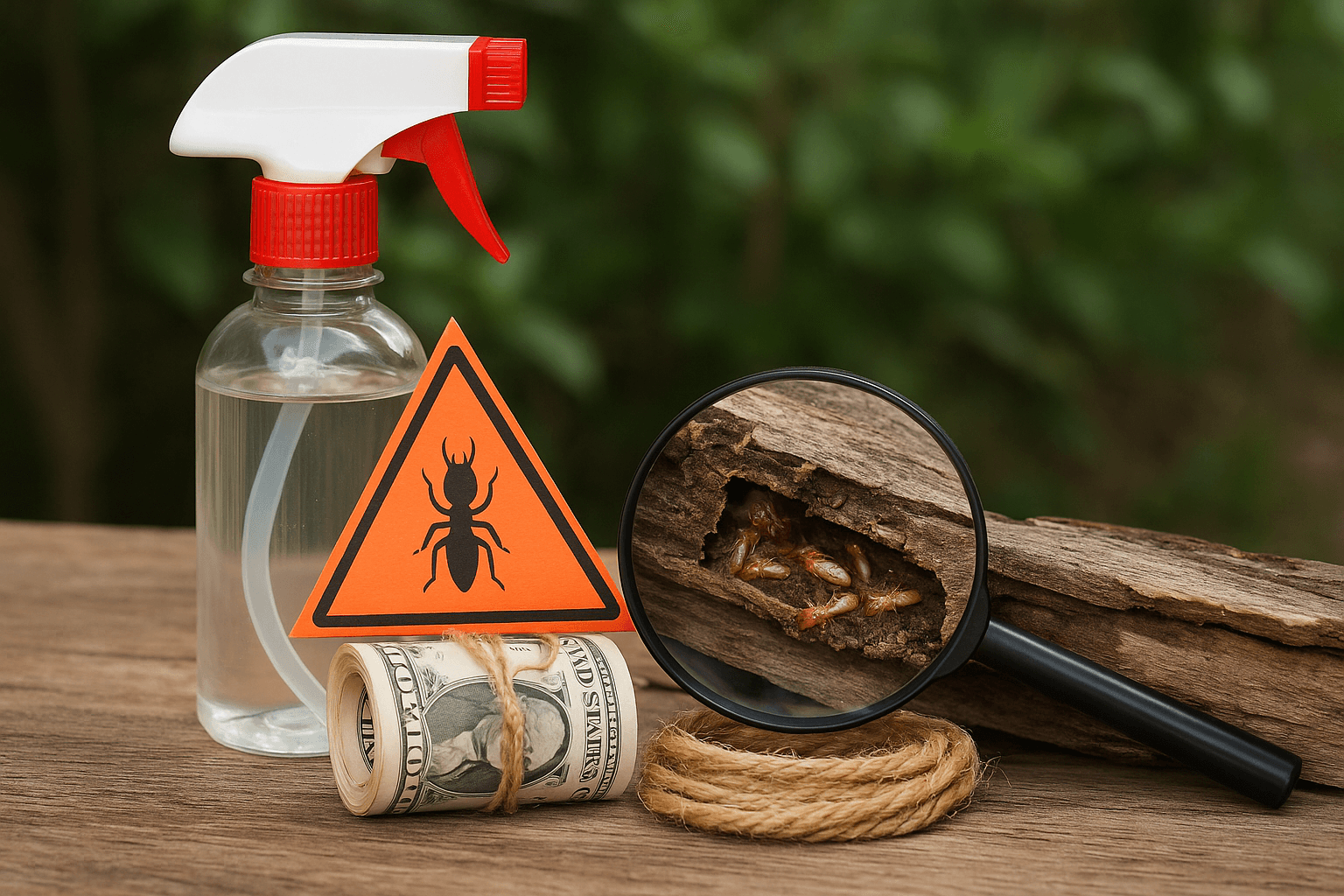
Living in Maricopa County, we get used to the dry heat, but you never really get used to the sinking feeling of seeing a mud tube crawling up your foundation. It’s one of those things that keeps homeowners up at night—worrying if the house is literally being eaten from the inside out. But here’s the good news: protecting your home doesn’t always mean draining your bank account.
Contents
- 1 Let’s Talk About the “Hidden” Costs First
- 2 Moisture: The Termite’s Best Friend (And Your Worst Enemy)
- 3 Landscaping Logic: Don’t Feed the Bugs
- 4 The Six-Inch Rule
- 5 Seal the Cracks (The $10 Solution)
- 6 The “Cardboard Box” Habit
- 7 Conduct Your Own “Inspection”
- 8 When Prevention Isn’t Enough
- 9 Let’s Protect Your Home Together
Let’s Talk About the “Hidden” Costs First
You know what? Dealing with termites is a lot like dealing with car maintenance. Nobody actually wants to pay for an oil change, right? It feels like throwing money into a hole. But we do it because replacing an engine costs a fortune. Termites work the same way, only they are much sneakier.
In Arizona, we are mostly dealing with Subterranean termites. These little guys are relentless. They live underground and come up looking for cellulose (wood). If you ignore the Prevention side of things, the repair bills can hit the thousands before you even realize you have a problem.
Honestly, the most budget-friendly thing you can do is change the environment around your home so termites just don’t want to be there. It’s about being smart, not necessarily rich.
Moisture: The Termite’s Best Friend (And Your Worst Enemy)
Here is the thing about our desert climate—it’s dry. We know it, the termites know it. Because it is so dry out here, termites are constantly hunting for moisture. If your home provides a nice, damp spot, you are basically ringing the dinner bell.
Fixing moisture issues is often the cheapest and most effective form of Termite Prevention.
Check Your AC Unit
In the Valley, our AC units run almost non-stop. That condensate line dripping outside? That is a lifeline for a termite colony.
- Make sure the drain line extends away from the foundation.
- Don’t let it create a permanent puddle right next to the wall.
- Extend the pipe if you have to; a few dollars of PVC pipe is cheaper than a Termite Treatment.
The Sprinkler Situation
We see this all the time. A sprinkler head gets knocked out of alignment and sprays directly onto the stucco or siding. Over time, that keeps the wood or framing behind the wall nice and soft. Walk around your yard while the sprinklers are on. If water is hitting the house, adjust the heads immediately.
Landscaping Logic: Don’t Feed the Bugs
Let’s talk about your yard. Landscaping in Phoenix usually involves a lot of gravel, but we still love our plants and mulch. However, the way you arrange your garden can either repel termites or invite them in for a party.
The golden rule here is simple: Reduce cellulose near the foundation.
If you have mulch right up against your house, you might as well lay out a welcome mat. Mulch retains moisture (which we already established they love) and it is made of wood (which they eat). It’s a double whammy.
Try this instead:
| Landscaping Feature | The Termite Risk | The Budget-Friendly Fix |
|---|---|---|
| Wood Mulch | High. Holds water and is food. | Swap for crushed rock or gravel near the foundation (at least a 2-foot buffer). |
| Firewood Piles | Very High. It’s a termite hotel. | Move piles as far from the house as possible. Raise them off the ground. |
| Dense Shrubs | Medium. Traps moisture against walls. | Trim bushes so there is airflow between the plant and your home. |
Does that make sense? You are trying to create a “dead zone” right around the perimeter where there is nothing to eat and no water to drink.
The Six-Inch Rule
There is a concept in construction and pest control called the “wood-to-ground contact” rule. Basically, you never want wood parts of your house touching the dirt.
If you have wood siding, a wooden porch column, or a door frame that goes all the way into the soil, you have a highway for termites. They don’t even have to build those little mud tubes; they can just tunnel straight from the dirt into the wood, completely unseen.
What can you do?
- Pull back the dirt: Sometimes, over years of gardening, the soil level rises. Grab a shovel and lower the grade so there are at least six inches of concrete foundation visible below the wood.
- Use concrete pavers: If you have a wooden post, don’t let it sit on the dirt. Slide a concrete paver underneath it. It breaks the bridge.
Seal the Cracks (The $10 Solution)
You’d be amazed at how small a gap a termite needs to get in. We are talking about the thickness of a Business card. Subterranean termites are soft-bodied; they can squeeze through tiny fissures in your foundation to get to the wood framing inside.
Go to the hardware store and grab a tube of high-quality, exterior-grade silicone caulk or concrete sealer. It’ll cost you maybe ten bucks.
Walk the perimeter of your house. Look for:
- Cracks in the foundation.
- Gaps where pipes (water, gas, electric) enter the wall.
- Spaces around windows and doors near the ground.
Fill them up. It’s not just good for termite prevention; it keeps scorpions and spiders out too. That’s a win-win, right?
The “Cardboard Box” Habit
Okay, this one is a bit of a tangent, but it matters. We all order stuff online these days. The boxes pile up in the garage or the attic.
Here is the kicker: Termites love cardboard. It is essentially pre-chewed wood. It is the easiest meal they can find. If you stack cardboard boxes on the floor of your garage, and there is a tiny crack in the slab, termites will find it.
I’ve seen garages where a homeowner picks up a box that’s been sitting there for a year, and the bottom falls out because it’s full of termites.
The Fix:
- Break down boxes and recycle them immediately.
- Switch to plastic storage bins. They are cheap, reusable, and termites can’t eat them.
- If you must keep boxes, put them on metal shelving units, not on the floor.
Conduct Your Own “Inspection”
Now, I’m going to be real with you—a DIY inspection isn’t as good as a professional one. We have tools and training that spot things the average eye misses. However, between professional visits, you should be the watchdog.
Set a reminder on your phone for every three to six months. Just take a walk.
What to look for:
- Mud Tubes: These look like lines of dried mud running up your foundation. If you break one open and see little white bugs, you’ve got activity.
- Bubbling Paint: Sometimes termite damage looks like water damage. If the paint on your drywall is bubbling or peeling, but there’s no water leak, give it a poke. If it feels papery or hollow, that’s bad news.
- Discarded Wings: After a swarm (usually after our monsoon rains), you might see piles of tiny wings on windowsills or near doors. This means a colony is nearby and looking to expand.
If you spot these, the “budget” phase is over, and the “protection” phase needs to start immediately. Ignoring it to save money will only cost you more in the long run.
When Prevention Isn’t Enough
Here’s the thing about Arizona termites: sometimes, you can do everything right, and they still find a way. They are nature’s recyclers, and they are incredibly persistent.
While these tips will drastically lower your risk and save you money by delaying or preventing an infestation, they aren’t a bulletproof vest. If your neighbor has termites, the pressure on your home increases. If you live in an older home, the chemical barrier put down when it was built has likely worn off.
Budgeting for a professional Termite Inspection is actually a money-saving move. catching a problem when it’s just a few bugs is hundreds (sometimes thousands) of dollars cheaper than fixing structural damage later. Think of it as insurance for your biggest asset.
Let’s Protect Your Home Together
Look, nobody wants to deal with this stuff. We get it. You want your home to be safe, solid, and pest-free without having to stress about every little crack in the wall.
At Arizona Termite Control, we believe in honest work and fair pricing. Whether you have found something suspicious and need a second opinion, or you just want the peace of mind that comes with a clean bill of health, we are here to help.
Don’t let the termites win.
Give us a call today:
480-660-3093
Or, if you prefer, click here to [Request a Free Inspection]. Let’s keep your home standing strong.


