
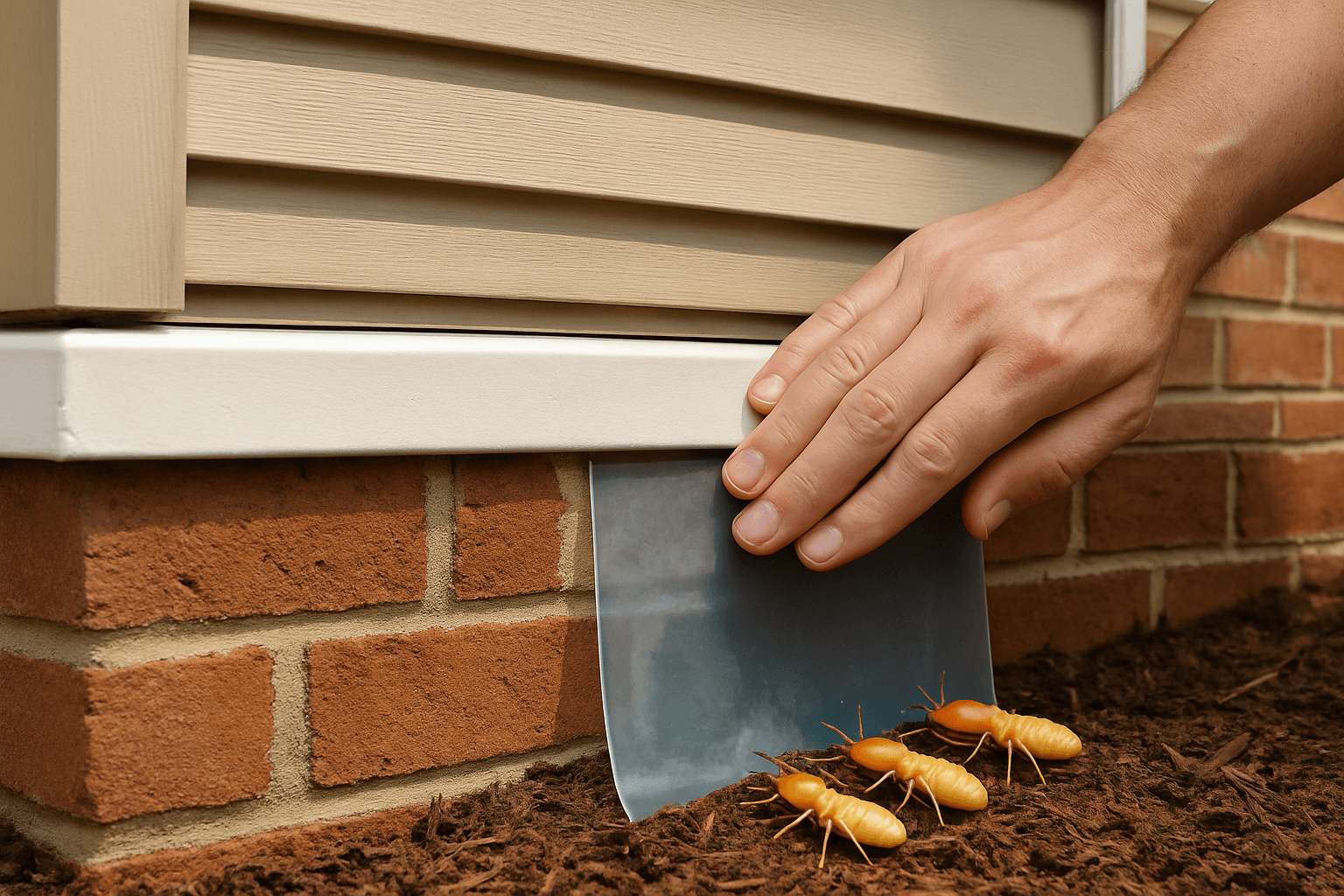
Living in the Valley of the Sun comes with a few trade-offs: we get beautiful winters and stunning sunsets, but we also have to deal with blistering summers and a ground that seems determined to eat our houses. If you own a home in Maricopa County, you’ve probably heard the old adage that there are two types of homes in Arizona: those that have termites, and those that will get them eventually. It’s a harsh reality, but ignoring the problem won’t make those little destroyers go away.
Wait, Why is Maricopa County Such a Hotspot?
You might think that because we live in a desert, bugs wouldn’t be such a massive issue, right? I mean, it’s dry, hot, and the ground is hard as a rock half the time. But here’s the thing—Subterranean termites actually thrive here. In fact, the species we deal with most often, particularly Heterotermes aureus, is incredibly resilient.
They aren’t just surviving out there in the dirt; they are actively hunting for moisture and cellulose. And guess what your house is full of? Exactly.
It’s easy to assume your home is safe because it’s built on a concrete slab or because you have stucco walls. Honestly, that’s a dangerous misconception. Termites are masters of infiltration. They can squeeze through a crack in your concrete foundation that is as thin as a Business card. Once they’re in, they work silently behind your walls, eating away at the structural framing while you’re totally unaware. It’s spooky when you think about it.
So, What Does “Blocking Them Out” Actually Look Like?
When we talk about blocking termites, we aren’t talking about putting up a tiny “No Trespassing” sign. We are talking about creating an environment where it is physically difficult or chemically impossible for them to enter your home.
It starts with understanding exclusion. This is a mix of physical maintenance and what we in the industry call cultural controls—basically, changing habits that invite these Pests in.
The Concrete Slab Myth
Let’s talk about your foundation for a second. Most homes here in Phoenix, Scottsdale, and Mesa are on slabs. You might think concrete is a barrier, but concrete shrinks and cracks over time. It’s natural. Those cracks are superhighways for termites.
We often see mud tubes (those little brown tunnels that look like dried dirt) running right up the side of a concrete stem wall and disappearing into the weep screed of the stucco. If you see those, the blockade has already been breached.
The “Termite Magnet” Checklist
Before we get into the heavy-duty treatments, let’s look at what you might be doing to accidentally roll out the red carpet for them. Termites need three things: food (wood/cellulose), moisture, and shelter. If you cut off the moisture and the access to food, you’re winning half the battle.
Here is a quick breakdown of what attracts them versus how to fix it:
| The Attractant | Why They Love It | How to Block It |
|---|---|---|
| Wood-to-Ground Contact | It provides a direct bridge from the soil to your home. | Keep wood siding or door frames at least 6 inches above the soil. |
| Excess Moisture | Termites dry out and die quickly without water. | Fix leaky spigots and ensure A/C condensation lines drain away from the foundation. |
| Mulch Beds | It holds moisture and provides food. A double whammy. | Use crushed rock or gravel instead of organic mulch near the house. |
| Firewood Piles | It’s an all-you-can-eat buffet parked next to your house. | Store firewood off the ground and away from the exterior walls. |
| Dense Vegetation | Bushes trapping humidity against the wall. | Trim bushes back so there is an air gap between plants and the stucco. |
Exterior Fortification: Your First Line of Defense
You know what? Most termite infestations in Arizona start because of drainage issues. I can’t tell you how many times we inspect a property and find the soil around the foundation is damp because of a sprinkler head that’s spraying the house instead of the hibiscus.
Moisture control is termite control.
In Maricopa County, we have monsoons. When that rain hits, water needs to flow away from your home, not pool against it. If water sits against your foundation, it softens the soil and makes it incredibly easy for termites to tunnel up. Plus, the moisture signals to the colony that “Hey, the conditions over here are perfect.”
Check Your “Grade”
Ideally, the soil level (the grade) should slope away from your home. If the dirt is piled up high enough that it touches the stucco or the wood siding, you have a problem. This is called “earth-to-wood contact,” and it is essentially a bridge over the moat. You need to pull that dirt back. You want a visible inspection zone of concrete foundation between the dirt and your siding.
The Heavy Artillery: Chemical Barriers
Okay, let’s get real for a moment. You can fix every sprinkler and move every pile of firewood, but because our native termite pressure is so high, you usually need a chemical barrier to truly block them out.
This is where things get a bit technical, but stick with me.
In the old days, exterminators used chemicals that repelled termites. The termites would smell it and turn around. Sounds good, right? The problem is, they would just keep searching until they found a gap in the chemical barrier—a tiny spot that was missed—and slip through.
Nowadays, we use non-repellent termiticides. This is a game-changer. The termites can’t smell it, see it, or taste it. They tunnel right through the treated soil, get the chemical on their bodies, and then carry it back to the colony. It works like a virus, spreading through the population and eliminating the Queen.
Trenching and Rodding
To create this barrier, we perform a process called trenching. We dig a shallow trench around the perimeter of your home and treat the soil. Where there is concrete (like your driveway or patio), we have to drill small holes and inject the material under pressure to ensure the soil underneath is soaked.
It sounds intense, I know. But it’s the only way to ensure that 360-degree seal around your biggest investment.
Warning Signs: When the Blockade Fails
Sometimes, despite your best efforts, they get in. Or maybe they were there before you bought the house. How do you know? Subterranean termites are sneaky, but they aren’t invisible if you know where to look.
- Mud Tubes: I mentioned these earlier. They look like veins made of dried mud running up your foundation or hanging from ceiling joists in the garage.
- Bubbling Paint: If your drywall paint looks like it’s bubbling or peeling, but it’s not wet to the touch, that could be termites eating the paper backing of the drywall.
- Hollow Wood: Tap on your baseboards or door frames. If it sounds hollow or papery, you might have damage inside.
- The “Swarm”: This is the stuff of nightmares. After a spring rain, winged termites (alates) fly out to start new colonies. If you see dozens of discarded wings on your windowsill, that is a massive red flag.
Can I Just DIY This?
I get asked this all the time. “Can’t I just buy some spray at the hardware store and handle it?”
Honestly? No.
I’m not just saying that because I represent Arizona Termite Control. I’m saying it because the products available to the general public are simply not strong enough or long-lasting enough to handle a desert termite infestation. Plus, the equipment needed to inject termiticide deep into the soil (or through a concrete slab) isn’t something you have lying around in the garage.
Spraying the surface kills the few termites you see. It does absolutely nothing to the hundreds of thousands living underground. You might feel better for a week, but the eating continues below deck.
Keeping Your Guard Up
Blocking termites is an ongoing process. It’s not a “one and done” deal forever. Treatments last for several years, but the harsh Arizona sun and shifting soil can degrade barriers over time.
That is why annual Inspections are critical. Think of it like a dental checkup. You brush your teeth every day (that’s your maintenance), but you still go to the dentist to check for cavities you can’t see (that’s the professional inspection).
If you haven’t had your home looked at in a while, or if you’ve noticed some suspicious “dirt” appearing in corners where it shouldn’t be, don’t wait. Wood damage doesn’t reverse itself.
Let’s Secure Your Home
Look, your home is likely your biggest asset. You don’t want to share it with a colony of insects that view your framing as an all-you-can-eat buffet. At Arizona Termite Control, we know the specific habits of Maricopa County termites better than anyone. We don’t just spray and pray; we build a strategic barrier to keep your home standing strong.
Don’t let the silent destroyers take over. Let us give you peace of mind.
Call us today at 480-660-3093
Or click here to Request a Free Inspection