


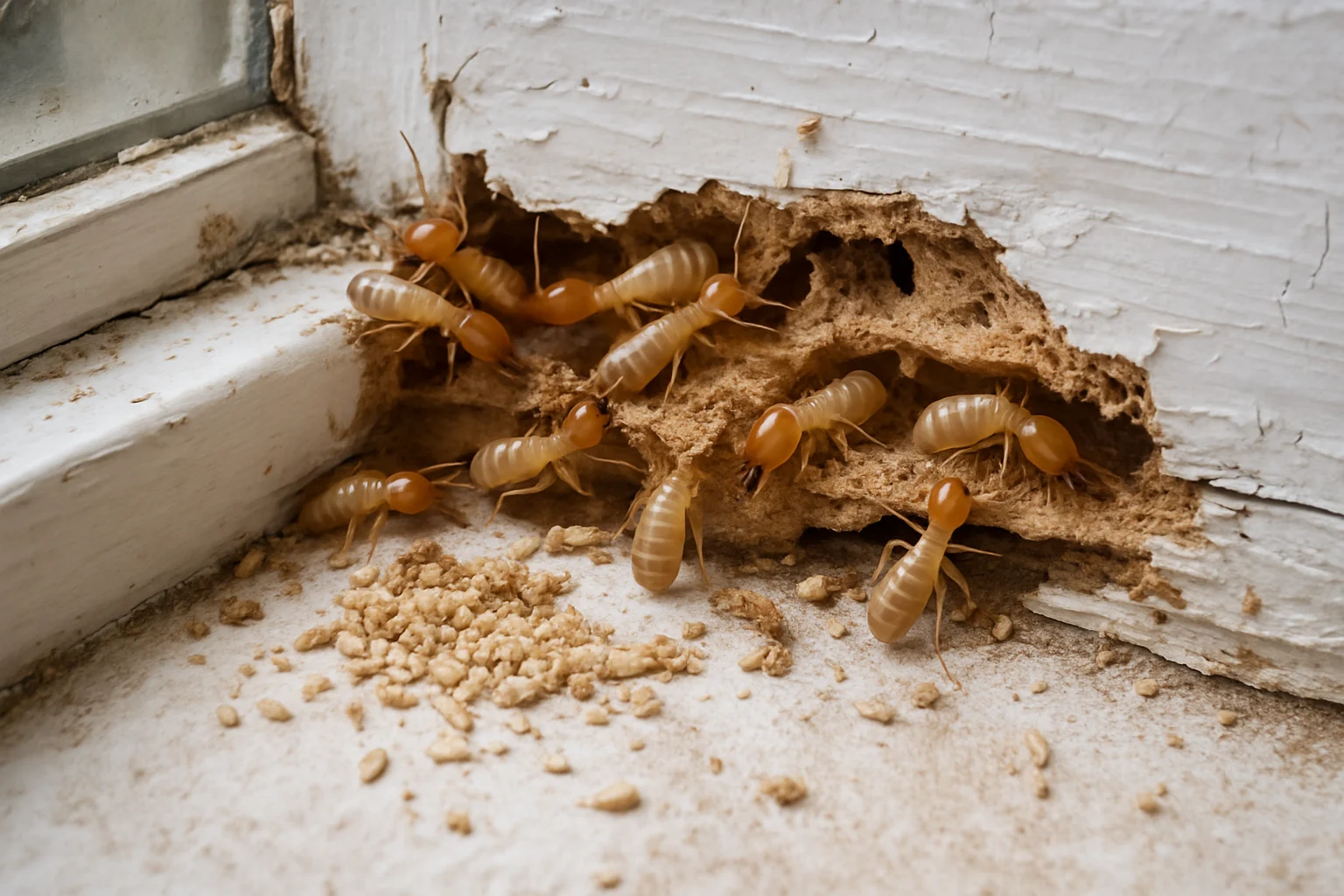
You’re watering the yard early one morning, trying to beat that brutal Arizona heat, when you spot something weird climbing up the side of your stucco foundation. Honestly, nothing ruins a peaceful Maricopa County morning faster than the sinking realization that you might have a bug problem. It’s a gut-dropping feeling, but catching the early warning signs can literally save your home from becoming an incredibly expensive, all-you-can-eat buffet.
Why Do These Pests Love the Desert So Much?
You’d think the dry, sun-baked soil of the Sonoran Desert would be entirely unappealing to a bug that desperately needs moisture to survive. It actually seems like a complete contradiction. I mean, how does a moisture-loving insect thrive in places like Phoenix, Chandler, or Scottsdale?
Let me explain. The Subterranean termites we deal with around here don’t live in the dry surface dirt. They live deep underground. Down there, the soil stays cool and damp, completely protected from our triple-digit summer heat. They build massive colonies right beneath our feet, just waiting for the right conditions to expand.
Then, the monsoon season hits. The humidity spikes, the ground gets saturated, and these little guys go absolutely crazy. They start building tiny, sheltered highways right up into our homes to forage for cellulose. So while you’re enjoying the smell of creosote after a sudden summer storm, they are busy working. It’s annoying, but understanding their basic behavior is the very first step to stopping a termite invasion in its tracks.
The Notorious Mud Tubes: Your First Big Clue
If there’s one universally recognized red flag for an active colony, it’s the mud tube. You’ve probably seen one before, even if you didn’t know what it was at the time. They look exactly like what they sound like, pencil-thin lines of dried dirt snaking up your stem wall, hanging from a garage ceiling, or crawling up your concrete foundation.
Why do they build these? Well, remember how we talked about their intense need for moisture? If a worker termite is exposed to our dry Arizona air for too long, it literally dries out and dies. So, they construct these little dirt tunnels using soil, chewed wood bits, and their own saliva to commute safely from their underground nest to your wooden wall framing. It’s basically a highly efficient, climate-controlled hallway for bugs.
If you spot one of these tubes, your first instinct might be to grab an old broom and smash it to pieces. You know what? Go ahead and break off a small section right in the middle. Check it again a few days later. If the tube is magically rebuilt, you definitely have a live, active infestation. Early warning signs of termites like these shouldn’t be ignored, because it means thousands of workers are currently foraging inside your walls.
What Exactly is That Stuff on the Windowsill?
Sometimes the signs aren’t outside on the stucco. Sometimes they’re sitting right on your interior window tracks, baseboards, or kitchen counters. Let’s talk about frass and discarded wings.
Termite frass is just a polite, scientific term for insect poop. While subterranean termites use their waste to help build their mud tubes, Drywood termites kick their waste out of tiny, pin-sized holes. We definitely see drywood species in Maricopa County, though slightly less frequently than the subterranean kind. Their frass ends up looking like small piles of wood-colored sawdust, or coarse coffee grounds, just sitting mysteriously on your floor.
And then there are the wings.
Swarmers and Shed Wings
Swarmers are the reproductive members of the colony. They fly out in massive numbers to mate and start brand new colonies, usually right after a heavy rain. Once they find a mate and a good place to settle down, they purposefully snap off their own wings because they don’t need them anymore. Finding a pile of identical, translucent wings near a light fixture, on a window sill, or near a door frame is a massive red flag.
People often confuse flying termites with flying ants. Here’s the thing: they look incredibly similar to the untrained eye, but there is an easy trick to tell them apart. Termites have straight antennae and wings of equal length. Ants have bent antennae and longer front wings.
Honestly, seeing a swarm inside your house is terrifying. It means a mature colony has already been established right under your nose for quite a few years.
The Classic Knock Test: Hollow Wood and Blistering Paint
You know those cheap chocolate bunnies you get around Easter? They look solid and substantial from the outside, but the second you bite into one, you realize it’s completely empty inside. That’s exactly what these insects do to the structural wood in your house.
They consume wood entirely from the inside out. They meticulously leave a wafer-thin veneer of timber or just the exterior paint intact, so the outside world has no idea what’s happening. This sneaky behavior makes visual detection incredibly difficult. But you can use your ears.
If you suspect an issue, just walk up to a baseboard, door frame, or window sill and tap it firmly with the handle of a screwdriver. A solid piece of wood will sound dull and dense. A termite-damaged piece of wood will sound remarkably hollow, almost like thin paper.
Sometimes, you don’t even need to knock. You might notice your baseboards looking slightly crushed, wavy, or caved in. Or maybe the paint on your walls is suddenly blistering and peeling in a way that looks exactly like water damage. Homeowners frequently call a local plumber thinking they have a slow pipe leak behind the drywall, only to tear the wall open and find a million hungry insects chewing through their two-by-fours.
The Most Common Hiding Spots Around the House
It really helps to know where these pests are most likely to strike. Since our local subterranean species love coming up directly from the dirt, the lower levels of your property are usually the front lines. But they can travel surprisingly far through tiny cracks in your concrete slab. A crack as thin as a Business card is plenty of room for them to squeeze through.
Here is a quick breakdown of where you should regularly check for termite damage in Arizona homes:
| Location | What to Look For | Why They Target It |
|---|---|---|
| Exterior Foundation | Mud tubes climbing the concrete stem wall | Provides direct, hidden access from the soil to the wood framing. |
| Bathrooms & Kitchens | Wavy paint, hollow-sounding cabinets | Subtle moisture from pipes makes the nearby wood softer and highly appealing. |
| Garage Walls | Pinholes in drywall, small dirt trails | Often uninsulated and built directly on the slab, making it an incredibly easy target. |
Make it a habit to walk the perimeter of your home once a month. Just pull back the landscaping rock a bit, check the foundation, and look closely behind those big oleander bushes. A little routine vigilance goes a very long way.
Why DIY Pest Control is Usually a Losing Battle
I completely get the urge to fix things yourself. We all want to save a few bucks. You run to the local hardware store, grab a big plastic jug of generic bug killer, and eagerly spray it all over the mud tubes you found in the garage. Problem solved, right?
Wrong. So, so wrong.
When you spray a cheap repellent chemical from a big box store, you might kill a few dozen workers on contact. But a mature subterranean colony can easily have hundreds of thousands of members living deep underground, safely out of reach. All you’ve done is irritate them. They will simply abandon that specific mud tube and find a brand new route into your house, usually somewhere you can’t see, like deep behind your shower walls.
Professional termite control experts use completely different tools and strategies. We rely on highly advanced, non-repellent liquid termiticides, like Termidor. The bugs can’t smell it, taste it, or see it. They walk right through the treated zone, pick up the active ingredient on their bodies, and unknowingly carry it straight down into the nest. It spreads rapidly from bug to bug, a process known as the “transfer effect”, eventually wiping out the entire colony, including the queen.
These stations are strategically placed in the soil around the perimeter of your home. The workers find the bait, which contains a specialized insect growth regulator, and bring it back to share with the colony. They literally lose the ability to molt and naturally die off. It’s highly technical, incredibly effective, and scientifically proven. You simply can’t get that kind of lasting structural protection with a $15 bottle of spray. The recommendation should account for the termite evidence, accessible areas and treatment history. Ask the provider to explain the proposed work, preparation and any follow-up before deciding.
Don’t Let Your Biggest Investment Become Bug Food
Your home is likely the most expensive thing you will ever own. It’s where your family sleeps, where you celebrate major holidays, and where you confidently build your life. The thought of thousands of silent, hidden insects slowly chewing through its bones is enough to make anyone lose sleep. I mean, it’s a genuinely terrifying thought.
But you really don’t have to live with that constant anxiety. Spotting the early warning signs, the mud tubes on the stucco, the discarded wings by the door, the hollow-sounding baseboards, gives you a massive advantage. If you know exactly what to look for, you can catch the problem early and stop the destruction before it compromises your home’s safety and property value.
Describe the property, where the evidence appeared and any earlier treatment when requesting an inspection. The service provider can discuss findings, access and the appropriate next step after follow-up. Related service information
Describe the property, where the evidence appeared and any earlier treatment when requesting an inspection. The service provider can discuss findings, access and the appropriate next step after follow-up. 480-660-3093 · Request a Free Inspection