
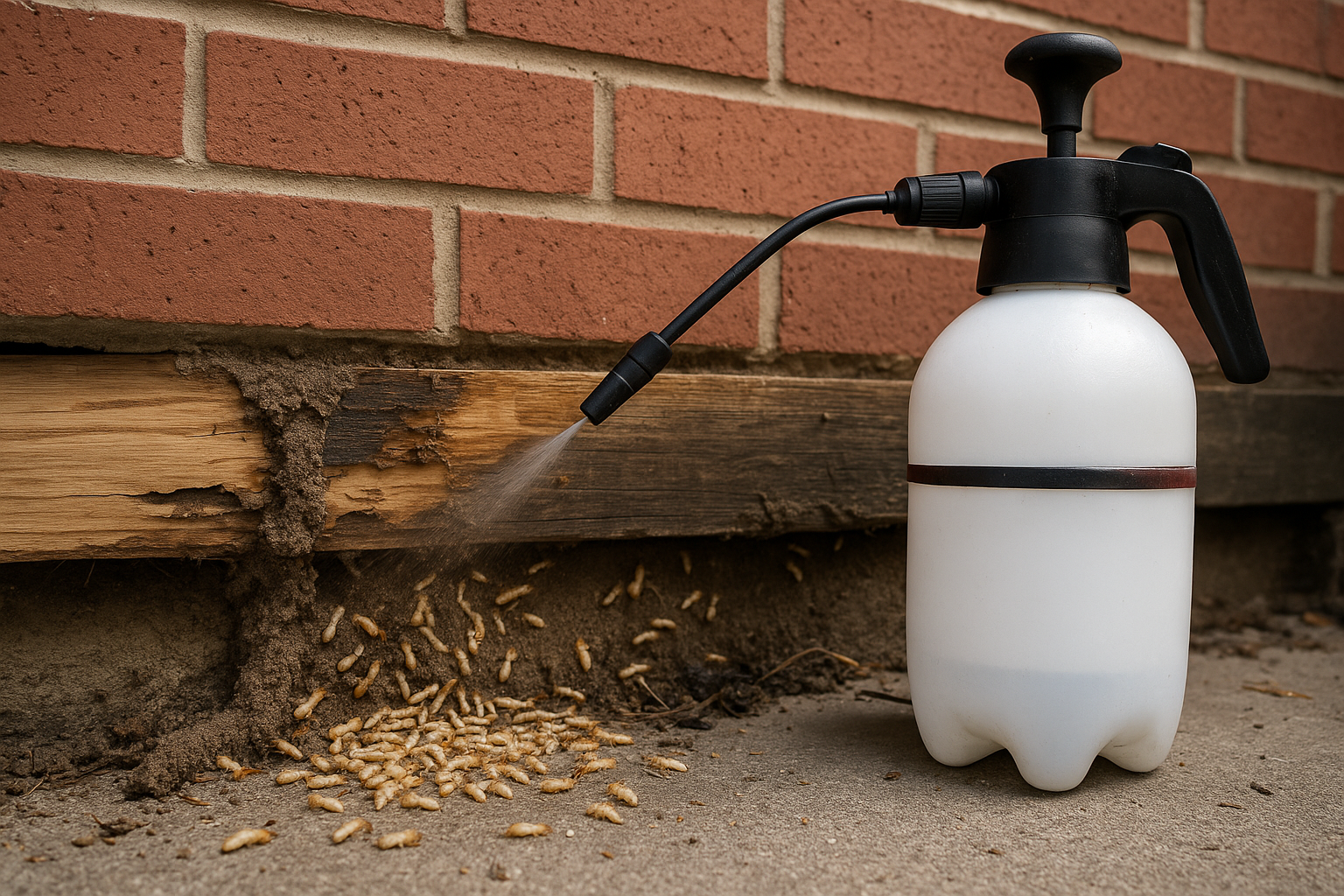
Let me guess, you just walked into your garage or moved a box in the spare bedroom and saw a weird, crusty dirt line creeping up the drywall. That fragile little mud tube is the absolute classic calling card of Subterranean termites, and honestly, finding one is enough to make any homeowner’s stomach drop. But before you panic and assume your house is crumbling into sawdust, let us figure out exactly how to beat these relentless Pests together.
So, who exactly is crashing your property?
Most folks think termites just live inside the wood they eat. That might be true for some species, but it is a massive misconception when we are dealing with the most common threat in our area. When we talk about subterranean termite control in Maricopa County, we are actually talking about bugs that live deep underground.
They build massive colonies down in the dirt. Then, they commute to your house for a meal. Think of them as terrible neighbors who sneak into your kitchen every night to eat your actual walls instead of the food in your fridge.
The main culprit around here is Heterotermes aureus, which is just a fancy scientific name for the desert subterranean termite. These guys thrive in our specific desert climate. They forage through the dirt, constantly looking for cellulose. Cellulose is the fibrous structural material in wood, paper, cardboard, and even the paper backing of the drywall in your home.
Here is the thing. These tiny workers have very thin skin. They physically cannot stand the dry Arizona air. Exposure to our brutal heat dries them out in minutes. That is exactly why they build those little dirt tunnels on your foundation walls. The mud tubes keep their fragile bodies moist and protected while they travel from the soil to the structural wood of your house.
Why our desert is an all-you-can-eat buffet
You might wonder why bugs that need moisture love living in the middle of a desert. It sounds completely backward. Honestly, it kind of is.
But subterranean termites are incredibly resourceful. They dig down as far as they need to find moisture in the soil. During the dry season, they retreat deep underground. Then, the summer monsoon season rolls into Phoenix, Scottsdale, and Mesa. The skies open up, dumping rain onto the hard caliche soil.
The ground softens. The humidity spikes. Suddenly, the termites get extremely active. The moisture signals the colony that it is time to expand. They send out winged termites, called swarmers, to mate and start new colonies near your home.
You might see these flying bugs around your porch lights after a heavy summer rain. It is easy to brush them off as flying ants. That is a mistake you definitely want to avoid. Let me show you the difference real quick.
| Feature | Subterranean Termite Swarmer | Common Flying Ant |
|---|---|---|
| Wings | Four wings of equal length | Four wings, front pair is longer |
| Antennae | Straight, like tiny beaded necklaces | Bent or elbowed |
| Waist | Thick and straight | Pinched and narrow |
But my house sits on a solid concrete slab!
I hear this exact phrase all the time. You would think a thick concrete slab foundation means bugs cannot get inside, right? I hate to be the bearer of bad news, but a solid slab is no match for these guys.
Concrete shrinks and settles over time. It creates hairline cracks. A subterranean termite only needs a gap about 1/32 of an inch wide to squeeze through. That is roughly the thickness of a credit card.
They also find their way in through expansion joints. They crawl up the tiny gaps around plumbing pipes that penetrate the concrete slab in your bathrooms and kitchen. They are sneaky. They find the invisible weak points in your home’s armor.
This means your concrete foundation is not a shield. It is just a minor detour for a hungry colony. This is why getting a professional Termite Inspection is so important. We know exactly where to look for these hidden entryways.
Spotting the invisible enemy
The biggest problem with subterranean termites is their stealth. They do not want to be seen. They eat the wood from the inside out, leaving the exterior surface looking perfectly normal. You could have a baseboard that looks pristine but is essentially hollow on the inside.
You have to act like a detective to catch them early. Here are the distinct signs you should look for around your property:
- Those infamous mud tubes: Look for brown, crusty lines about the width of a pencil. Check the exterior foundation, inside the garage, and along baseboards.
- Shed wings on windowsills: After a swarm, the termites drop their wings. If you find piles of silvery wings near doors or windows, a colony is trying to establish itself nearby.
- Hollow-sounding wood: Take the heavy handle of a screwdriver. Tap gently on your door frames, window frames, and baseboards. If it sounds hollow or papery, you might have a problem.
- Bubbling or peeling paint: Sometimes termite damage mimics water damage. As they eat the drywall paper, the paint on top starts to bubble and flake off.
- Pinholes in drywall: Termites occasionally eat entirely through the wall. They quickly plug the hole with a tiny speck of mud to keep the dry air out.
The whole DIY Treatment myth
Let us talk about a major trap that catches a lot of well-meaning homeowners. You find a mud tube. You panic. You run to the local hardware store and buy a gallon of bug spray. You douse the mud tube and feel a sense of victory.
Here is the harsh reality. You did not solve the problem.
Store-bought sprays are mostly repellents. They kill the few bugs you actually hit with the liquid. But the other tens of thousands of termites back in the soil? They just detect the harsh chemicals, back away, and find a different route into your house. You essentially just rerouted the traffic. You did not destroy the colony.
To win this battle, we need to get the queen. If you do not get the queen, you do not win. She will just keep laying thousands of eggs a day to replace the workers you killed.
Real-deal techniques that actually work
This is where the science of modern pest control gets really fascinating. At Arizona Termite Control, we do not mess around with cheap repellents. We use advanced, industry-leading methods to completely wipe out the colony.
Let me explain the two main strategies we use.
The first method is the liquid defense barrier. We use a professional-grade termiticide called Termidor. This is what we call a non-repellent termiticide. That is just an industry term meaning the bugs cannot smell it, taste it, or see it.
They wander through the treated soil completely unaware. The product coats their bodies. Termites are very social creatures. They constantly groom each other and share food. When that coated worker goes back underground, it spreads the treatment to every other bug it touches. It works like a microscopic Trojan horse. Within a short period, the entire colony collapses.
The second method involves termite baiting systems, like the Sentricon system. This approach is brilliant in its simplicity. We place bait stations in the ground around the perimeter of your home. The stations contain a cellulose material that is scientifically proven to be more appetizing to termites than the actual wood in your house.
But this bait contains a hidden weapon. It uses a chitin synthesis inhibitor. That sounds like a mouthful, I know. Basically, termites have to shed their skin (molt) to grow. Chitin is the structural material that makes up their new outer shell. The bait stops their bodies from producing chitin. When they try to molt, they simply cannot survive.
The worker termites carry this lethal bait straight down into the nest. They feed it to the queen. Once the queen is gone, the entire colony dies off. It is a highly targeted, incredibly effective way to achieve total professional termite eradication.
Let us get your peace of mind back
Living in Maricopa County brings a lot of perks. We get gorgeous winter weather, stunning desert sunsets, and a great lifestyle. But sharing our environment with millions of wood-hungry bugs is a definite downside.
Discovering a termite infestation feels deeply violating. Your home is likely your biggest investment. Watching tiny insects slowly tear it apart is incredibly stressful. You find yourself constantly checking the walls, worrying about the structural integrity of your roof trusses, and wondering how much the repairs are going to cost.
You absolutely do not have to live with that anxiety.
You need a team that knows the specific behavior of desert subterranean termites. You need technicians who understand how our dry heat, monsoon rains, and hard soil dictate the movement of these pests. That local expertise is exactly what we bring to the table. We stop the destruction in its tracks and make sure these bugs never come back to bother you again.
Do not wait until a tiny mud tube turns into thousands of dollars in structural damage. Let us take this burden completely off your shoulders today.
Reach out to our local team at 480-660-3093. We will answer your Questions, walk you through the process, and help you regain total control of your home. You can also visit our website to Request a Free Inspection right now. We will send an expert out to assess your property, identify any hidden threats, and give you a clear, honest plan to protect your house for good.