
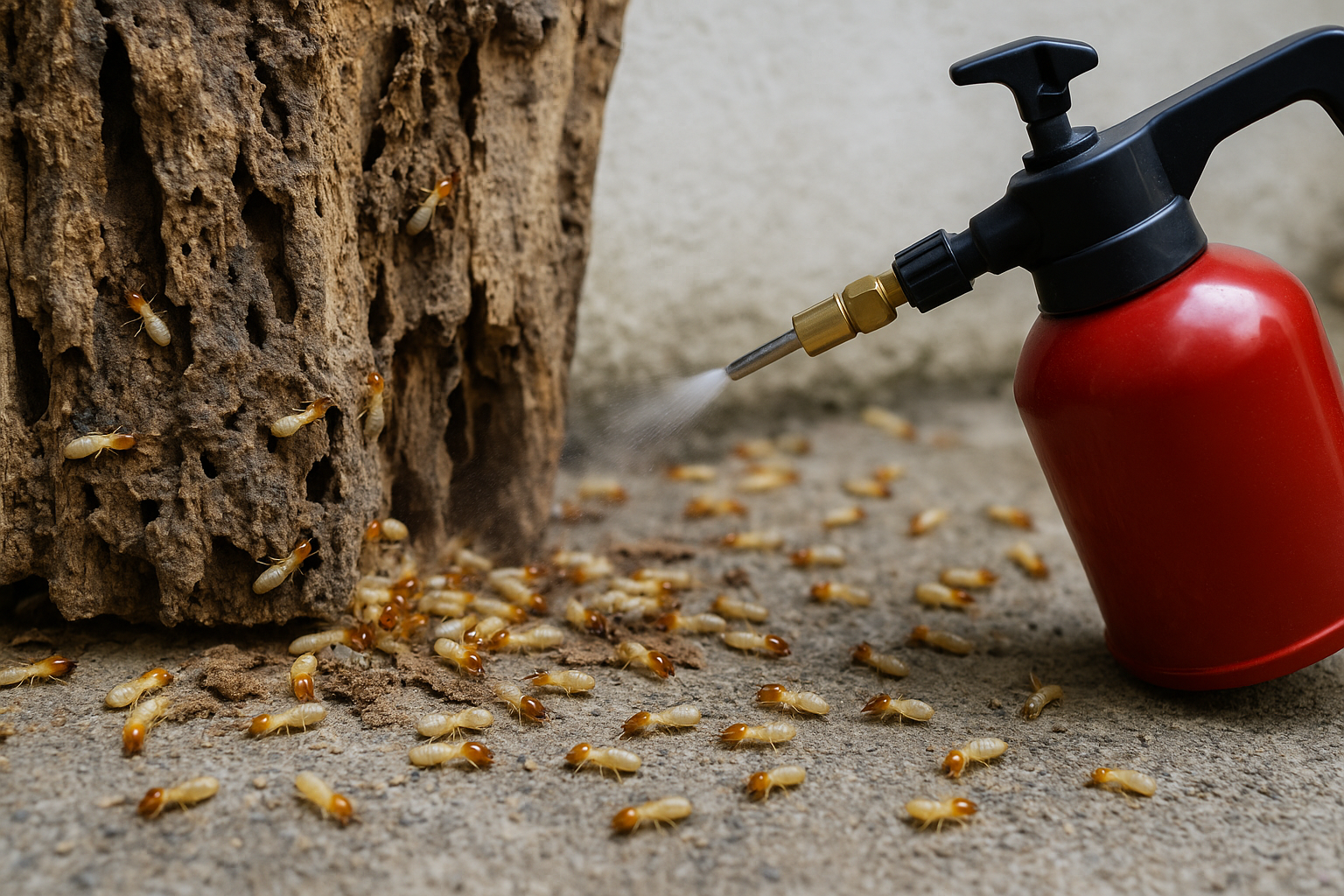
You’re sitting in your living room, escaping the brutal Maricopa County heat, when you spot a strange, crusty little mud tube creeping up your garage wall. Honestly, it’s the exact moment your stomach completely drops, because seeing that usually means a silent army is literally eating your house. Let me explain why ignoring this tiny dirt highway is a massive mistake, and how you can actually eliminate these Pests for good.
Contents
Wait, Are Those Actually Termites?
Here’s the thing about bug problems in Arizona. We already deal with scorpions hiding in our shoes and rattlesnakes sunbathing on our patios. It feels almost entirely unfair that we also have to worry about our walls being devoured from the inside out. But you know what? A lot of homeowners completely misidentify the threat before the real damage happens.
You might see a swarm of bugs around your porch light after a heavy summer monsoon and think, “Oh, just some flying ants.” Actually, there’s a good chance those are termite swarmers looking for a nice place to start a new family. They drop their wings, find a tiny crack in your foundation, and get to work. It’s incredibly frustrating.
You’d think it would be obvious if your home was under attack. Well, yes and no. Termites are notoriously secretive. They hate the open air and sunlight, so they build enclosed shelters. If you happen to knock away a piece of drywall and find what looks like dried dirt packed into the wood, you are definitely looking at signs of termites.
Other clues are a bit more subtle. Maybe your floorboards sound oddly hollow when you tap them, or your paint has started bubbling up in a way that looks like water damage. A lot of folks hire a plumber thinking they have a leaky pipe behind the wall. Nope. It’s just a thriving colony of wood-destroying insects making themselves very comfortable.
The Maricopa County Termite Scene
Living in the desert means we have a very specific set of pests. We don’t just have one type of termite; we have a few, and they behave differently. Understanding what you are up against is critical if you want to eliminate termite colonies effectively.
The absolute worst offenders around here are desert Subterranean termites. These guys live deep underground to escape the baking Arizona sun. They need moisture to survive. When they get hungry, they build those classic mud tubes up the side of your concrete stem wall to reach the wooden framing of your house. It is a highly organized, relentless process.
On the flip side, we occasionally see Drywood termites. They don’t need contact with the soil at all. They just fly right into your attic vents or window frames and start chewing.
Take a look at this quick breakdown so you know exactly what might be crawling around your property:
| Termite Species | Typical Hiding Spot | Threat Level to Your Home |
|---|---|---|
| Desert Subterranean | Underground, foundation walls, lower framing | Very High (Fast structural damage) |
| Drywood Termites | Attics, roof eaves, antique furniture | Moderate (Slower damage, but hard to reach) |
| Desert Dampwood | Decaying logs, water-damaged fascia boards | Low (Usually stay outside in wet wood) |
Most of the Termite Treatment in Maricopa County focuses heavily on the subterranean variety. Because our soil is so hard and dry, these bugs are incredibly desperate for the moisture and shade your house provides.
Why Hardware Store Sprays Actually Make Things Worse
Let’s be completely honest for a second. When you find a bug in your house, your first instinct is probably to grab a can of bug spray from the garage and absolutely douse the area. That makes sense, right? You want them dead immediately. But with termites, this instinct is basically a trap.
If you spray a heavily scented chemical on a mud tube, you will absolutely kill the few dozen workers hanging out inside it. You will feel a brief sense of victory. However, the colony living ten feet underground just realizes that one of their food routes is suddenly toxic. So, they simply abandon that specific tunnel and build a new one on the exact opposite side of your house.
You haven’t solved the problem; you’ve just moved it. It’s a classic case of winning the battle but entirely losing the war.
Professional termite control relies on a completely different strategy. We don’t want to just repel them away from one wall. We want them to unknowingly carry a lethal Treatment right back to their queen. If the queen dies, the entire colony collapses. It really is that simple.
How We Actually Wipe Out the Whole Colony
So, if cheap sprays just annoy them, what actually works? This is where the science of pest control gets genuinely fascinating. To get a successful colony elimination, you have to use their natural behaviors against them. Termites are highly social insects. They groom each other, feed each other, and constantly share resources.
We use specific methods to take advantage of this sharing culture.
- Liquid Barrier Treatments: We use non-repellent termiticides. Because the chemicals are entirely undetectable to the bugs, they crawl right through the treated soil around your foundation. They get the active ingredient (like fipronil) all over their bodies. When they go back underground and interact with their friends, the chemical spreads like a terrible cold. Within weeks, the whole population crashes.
- Trenching and Rodding: This sounds like heavy construction, but it is just a highly precise way to apply that liquid barrier. We dig a shallow trench right along the foundation of your home. Then, we use a specialized tool to inject the termiticide deep into the soil where the bugs naturally travel. It creates a continuous, invisible shield.
- Targeted Termite Bait Systems: Sometimes we place small bait stations in the ground around the perimeter of your yard. Inside these stations is a material heavily laced with a slow-acting insect growth regulator. The worker termites find the bait, think it’s a delicious piece of wood, and take it straight to the queen. It literally stops them from molting, which eventually wipes out the entire colony.
We often mix these strategies depending on how your home is built. A house with a massive concrete patio might require some careful drilling to get the treatment where it needs to go, while a home with a standard dirt perimeter is a bit more straightforward.
What Happens After the Treatment?
People always ask me, “How quickly are they going to be gone?” The truth is, it isn’t instantaneous. I know that is hard to hear when you just want your home safe again.
Because we rely on the worker termites to spread the treatment throughout their colony, it takes a little bit of time. Usually, you will stop seeing active bugs within a couple of weeks. But the complete collapse of the nest underground might take a month or two.
During this waiting period, you might even see a few confused, sluggish termites wandering around. Don’t panic. That is actually a fantastic sign. It means the treatment is severely damaging their nervous systems, and they are losing their ability to function. The process is working exactly as intended.
You should also be aware that after the colony is eliminated, the physical damage they left behind does not magically fix itself. You might still need a contractor to replace some heavily chewed baseboards or sister a damaged wall stud. But at least you will know the new wood won’t instantly become a buffet.
Keeping Your Home Safe Long-Term
Getting rid of a termite colony is a massive relief. But living in Arizona means there is always another colony out there in the desert, slowly expanding its territory. You have to maintain your defenses.
Honestly, simple home maintenance goes a very long way. Termites are incredibly lazy when it comes to finding water. If you have a leaky sprinkler head spraying directly onto your stucco, or an air conditioning condensation line dripping right next to your foundation, you are basically rolling out a red carpet for them. They absolutely love moist soil.
Keep your gutters clean, fix plumbing leaks immediately, and make sure any decorative wood mulch is kept at least a few feet away from the actual walls of your house. It sounds overly simple, but reducing moisture around your foundation is half the battle.
Also, keep an eye on things after a heavy rainstorm. Our monsoon season brings out the swarmers in droves. If you see discarded wings on your window sills in late July, it is time to start paying very close attention to your baseboards and exterior walls.
Let’s Get Your House Back
Termites are incredibly stressful. Your home is probably your biggest financial investment, and the thought of insects silently chewing away at the structural framing is enough to keep anyone awake at night. You don’t have to just sit there and hope they go away on their own, because they absolutely won’t.
You need a permanent, science-backed solution that targets the root of the problem—the colony itself. At Arizona Termite Control, we know exactly how these desert pests operate, and we know exactly how to stop them.
Stop wasting time and money on temporary fixes that just push the bugs to another side of your house. We can inspect your property, identify the exact species causing the trouble, and map out a precise treatment plan to protect your home.
Give us a call today at 480-660-3093 to speak with our local experts, or Request a Free Inspection directly on our website. Let’s eliminate the colony, secure your property, and give you back your peace of mind.