Listen, if you own a house here in Maricopa County, you already know that keeping the harsh desert environment outside where it belongs is basically a full-time job. Between the brutal summer heat that tries to melt your steering wheel and those sudden monsoon storms that flood the yard, the very last thing you want to worry about is a colony of termites quietly eating your wall framing. Honestly, dealing with a termite problem feels like a massive invasion of privacy, but finding the right solution does not have to be a nightmare.
So, What Exactly Are We Up Against Here?
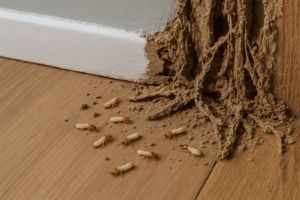
You might be wondering why termites even want to live in the desert. It seems like a terrible place for a moisture-loving bug to set up camp. Well, here is the thing. They do not live out in the dry, baking sun. They live deep underground, shielded from the heat, and they use those famous little mud tubes to travel safely into your nice, air-conditioned home.
Desert Subterranean termites are incredibly common around the Phoenix metro area. They are small, extremely determined, and capable of causing serious structural damage if left unchecked. A lot of homeowners get a false sense of security because our houses are mostly stucco and block on the outside. But inside? Inside, it is a buffet of wooden studs, baseboards, and drywall paper.
You know what usually happens? You are vacuuming one Saturday, minding your own Business, and you spot a weird dirt streak hanging straight down from the ceiling or creeping up from the baseboard. Your stomach drops. You wipe it away, hoping it was just mud from the dog, but deep down, you know exactly what it is.
That dread is real, and it is completely normal. Your home is probably your biggest investment. Protecting it matters. But before you panic and assume your house needs to be saturated in harsh chemicals from top to bottom, let me explain a much smarter approach.
Making Sense of Integrated Pest Management
You have probably heard the phrase Integrated Pest Management—or IPM—thrown around if you have been Googling pest control options. It sounds like dry, overly complex corporate jargon. It sounds like something a city planner would talk about.
But really? IPM is simply a common-sense, structured way to handle Pests. Instead of just spraying chemicals blindly and hoping for the best, Integrated Pest Management looks at the whole picture. It is about understanding the bug, figuring out why it is targeting your specific house, and fixing the root cause while carefully applying treatments only where they actually make a difference.
Let us say you have a leaky spigot right next to your foundation. Termites absolutely love that consistent moisture. A traditional, old-school approach might just douse the soil around the spigot with chemicals. That kills the bugs currently there, sure. But IPM says, “Hey, let’s fix that leaky pipe first.” If you take away the water source, the environment becomes hostile to the termites. Then, you apply a precise Treatment to wipe out the remaining colony.
It is about working smarter, not just harder. We use biology and habits against the bugs.
The Core Game Plan for Kicking Termites Out
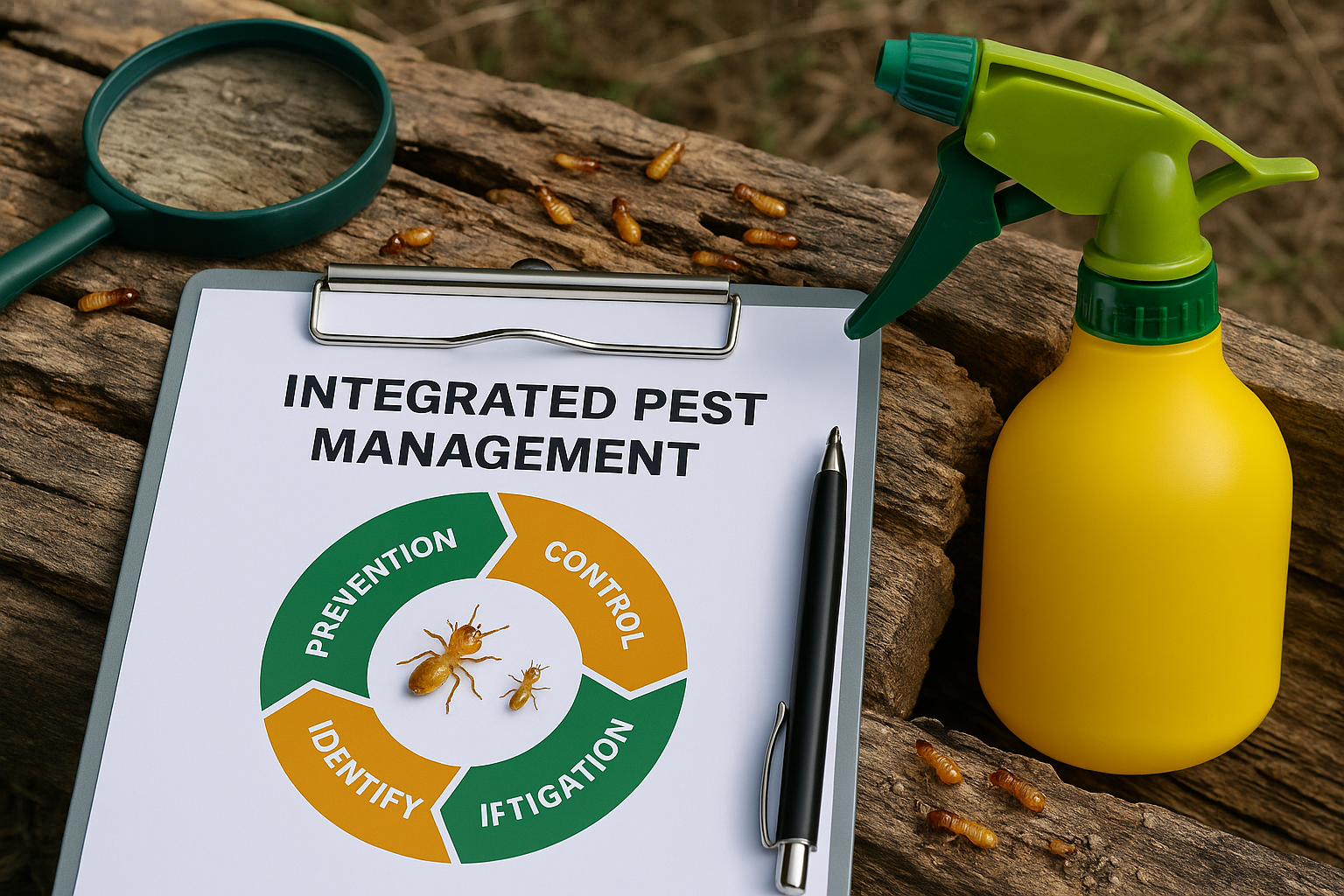
Let’s break down how this actually works in the real world. Integrated Pest Management relies on a few key steps that build on each other. It is not just a one-and-done visit; it is an ongoing strategy to keep your property safe.
| IPM Strategy | What It Actually Means | The Maricopa County Reality |
|---|---|---|
| Inspection | Finding out exactly who and where the enemy is. | Checking slab foundations, stucco weep screeds, and garage expansion joints. |
| Prevention | Making your yard a terrible place for bugs to live. | Moving firewood away from the house and fixing AC drip lines. |
| Targeted Control | Using the right treatments only where needed. | Applying localized termiticides or baits directly to active mud tubes. |
When we talk about targeted control, we mean striking the balance between highly effective termite treatments and keeping your living space safe for your kids and pets. We do not need to turn your yard into a toxic wasteland to get rid of subterranean termites.
Why “Spray and Pray” Just Doesn’t Cut It Anymore
There used to be a time when exterminators would just show up, spray gallons of strong-smelling liquid everywhere, and call it a day. Honestly, some places still do that. But it is just not the sharpest way to handle things anymore.
Here is a quick tangent. You know those massive, terrifying flying beetles we get during the summer? The Palo Verde beetles. A lot of folks see their huge grubs in the dirt and freak out, thinking they have mutant termites. They do not. Palo Verde beetles only care about tree roots, not your house. If a technician just sprayed broadly without identifying the actual pest, you would be paying to kill bugs that are not even a threat to your home’s structure.
This is why the identification phase of IPM is so crucial. We need to know exactly what species of termite is chewing on your house to choose the right bait or liquid application. Subterranean termites require a completely different treatment plan than Drywood termites.
Plus, heavy, random chemical applications can eventually lose their effectiveness. Pests adapt. The environment degrades the materials, especially under our intense Arizona sun. By using Integrated Pest Management, we rely on physical barriers, moisture control, and strategic bait stations. This multi-layered defense system lasts longer and works better.
Weekend Warrior Stuff: What You Can Do Right Now
You are probably wondering if there is anything you can do yourself to help out. The good news? Absolutely. While you should never try to handle an active termite infestation on your own with hardware store sprays, there are several things you can do this weekend to make your house far less attractive to these wood-eating pests.
- Fix those annoying leaks: Walk around the outside of your house. Is the AC condensation line dripping right next to your stucco? Route that water further away into a planter or gravel pit. Termites need moisture to survive the desert heat.
- Keep dirt off your stucco: A lot of homes in Phoenix and Scottsdale have raised flower beds. If the dirt is piled up higher than your foundation line and touches the stucco, you are basically giving termites a hidden, VIP entrance directly into your walls. Pull that dirt back.
- Move the woodpile: If you have firewood for a winter fire pit, do not stack it against the back patio wall. Keep it elevated off the ground and as far from the house structure as possible.
- Trim your bushes: Keep heavy vegetation trimmed a few inches away from the exterior walls of your house. Sun exposure is a natural termite deterrent. If the soil around your foundation is always shaded and damp, it invites trouble.
These small changes might seem trivial, but they play a massive role in the overall IPM strategy. You are essentially starving the termites of water and easy access.
Knowing When It Is Time to Call for Backup
It is incredibly frustrating to feel like tiny bugs are slowly eating away at your hard-earned property. I get it. We talk to frantic homeowners every single week who just discovered a mud tube in their garage or found a pile of shed wings on their window sill after a summer rainstorm.
You might be tempted to just scrape the mud tube off the wall and hope the problem goes away. Sometimes people think, “Well, I don’t see them anymore, so they must be gone.”
Unfortunately, they never just leave. Termite colonies contain hundreds of thousands of workers. If they found food—which is your house—they will keep coming back until a professional stops them.
That is exactly where Arizona Termite Control steps in. We know the unique building styles here in Maricopa County. We know how the local subterranean termites behave, where they hide, and exactly how to root them out using true Integrated Pest Management techniques. We do not just treat the symptom; we solve the underlying problem so you do not have to worry about it again next year.
Your home is a place for your family to relax, not a buffet for insects. You deserve the peace of mind that comes from knowing the structure around you is totally secure and protected by local experts who genuinely care about getting the job right.
Let’s Protect Your Home Together
Do not let a termite problem steal your sleep. If you have noticed any suspicious mud tubes, bubbling paint on your baseboards, or hollow-sounding wood, you need to act fast before the damage gets worse. We are right here, ready to help you take your home back.
Give Arizona Termite Control a call directly at 480-660-3093 to speak with our friendly local team.
Or, if you prefer to handle things online, you can quickly Request a Free Inspection through our website. We will come out, take a thorough look around, and give you honest, straightforward advice on the smartest approaches to protect your property. Let’s get this taken care of today.